🤔 What is a Mobile Network? (Basic Idea)
A mobile network allows users to:
Make calls 📞
Send messages 💬
Access the Internet 🌐
while moving from one place to another.
📌 In simple words:
Mobile networks provide wireless communication over large geographical areas using cellular technology.
🧠 Why Is It Called a Cellular Network?
The coverage area is divided into small regions called cells
Each cell has a base station (tower)
📌 As you move:
Phone switches from one cell to another
This process is called handoff / handover
🧩 Basic Components of a Mobile Network
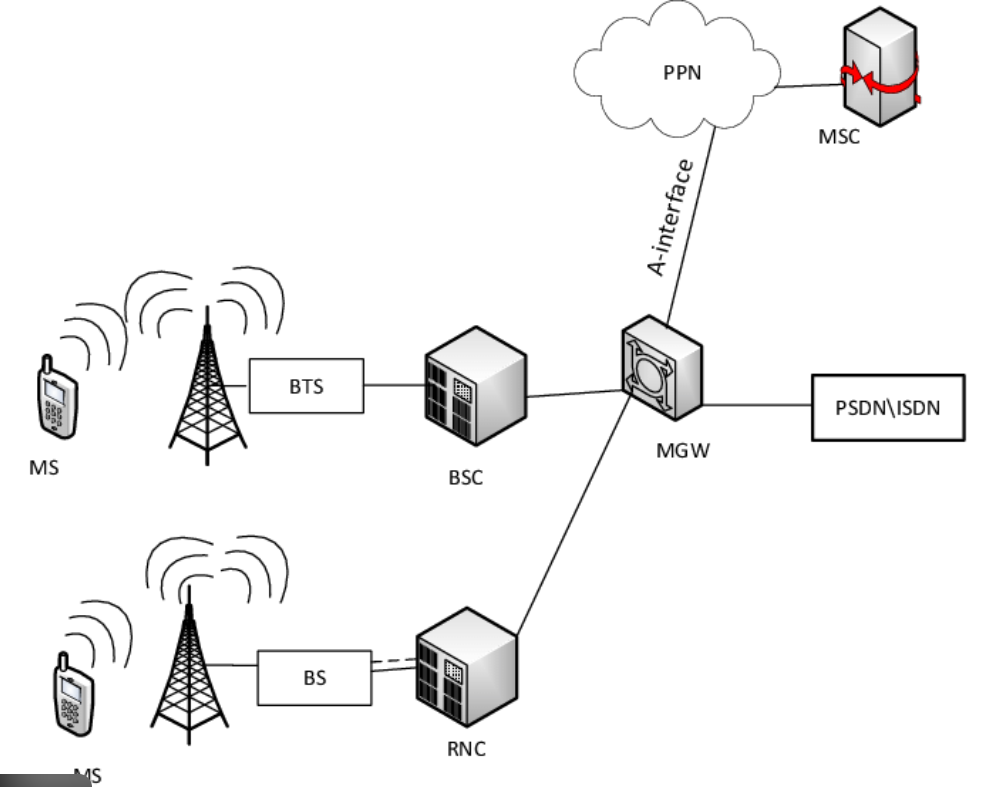
1️⃣ Mobile Device (UE) – Your phone
2️⃣ Base Station (BTS / Node B / eNodeB / gNodeB)
3️⃣ Core Network – Call routing, data services
4️⃣ Internet / PSTN – External networks
🧠 Evolution of Mobile Networks (Overview)
Generation | Focus |
|---|---|
2G | Voice |
3G | Voice + Data |
4G | High-speed Internet |
5G | Ultra-fast + Smart devices |
🟢 2G – Second Generation
2G introduced digital voice communication, replacing analog systems.
📌 Main purpose:
Voice calls
SMS (text messages)
GSM (Global System for Mobile)
CDMA (Code Division Multiple Access)
Digital voice quality
SMS support
Low data speed
Very slow Internet
No multimedia support
📌 Data speed: ~64 kbps
🟡 3G – Third Generation
3G introduced mobile Internet and multimedia services.
📌 First generation to support:
Video calling
Mobile browsing
Online apps
UMTS
WCDMA
HSPA
Faster Internet
Multimedia support
Better voice quality
Slower than modern needs
High latency
📌 Data speed: ~2 Mbps
🔵 4G – Fourth Generation (LTE)
4G is designed for high-speed Internet and data-centric communication.
📌 Voice calls are handled using:
VoLTE (Voice over LTE)
LTE (Long Term Evolution)
LTE-Advanced
High-speed Internet
HD video streaming
Online gaming
Low latency
Not optimized for massive IoT
Higher power consumption
📌 Data speed: ~100 Mbps to 1 Gbps
🔴 5G – Fifth Generation
5G is designed for:
Ultra-fast speed
Ultra-low latency
Massive device connectivity
📌 Not just for phones, but for everything connected.
mmWave
Massive MIMO
Beamforming
Extremely high speed
Near-zero latency
Supports IoT, AI, smart cities
Autonomous vehicles 🚗
Remote surgery 🏥
Smart cities 🏙️
Virtual reality 🥽
📌 Data speed: Up to 10 Gbps
⚖️ 2G vs 3G vs 4G vs 5G
Feature | 2G | 3G | 4G | 5G |
|---|---|---|---|---|
Primary Use | Voice | Voice + Data | High-speed Data | Smart Connectivity |
Data Speed | kbps | Mbps | Mbps–Gbps | Gbps |
Latency | High | Medium | Low | Very Low |
Services | Call, SMS | Video call | HD streaming | IoT, AI |
Technology | GSM | UMTS | LTE | NR |
🔁 Handover in Mobile Networks
📌 Handover occurs when:
Mobile user moves between cells
Call/data session continues without drop
👉 Essential for mobility support.
🧠 Advantages of Mobile Networks
Mobility 📱
Wide coverage 🌍
Always connected
Supports modern applications
❌ Challenges in Mobile Networks
Interference
Signal loss
Power consumption
Infrastructure cost
🧠 Memory Tricks
2G = Talk
3G = Browse
4G = Stream
5G = Smart world 🌍
⭐ One-Line Summary
🔹 Mobile networks evolved from voice-centric 2G systems to ultra-fast, low-latency 5G networks supporting smart and connected technologies.