🤔 What is the Transport Layer? (Basic Idea)
The Transport Layer is responsible for end-to-end communication between applications running on different devices.
📌 In simple words:
The Transport Layer ensures that data sent by one application reaches the correct application on the destination device, correctly and reliably.
🧠 Why Do We Need the Transport Layer?
Let’s understand the problem 👇
Network Layer delivers data to the correct device ✔️
But a device can run many applications at the same time ❌
📌 Example:
Browser 🌐
Email 📧
WhatsApp 💬
File download 📂
👉 Which application should receive the data?
💡 That responsibility belongs to the Transport Layer.
🧠 Real-Life Analogy
📦 Courier Delivery Example
City & street → Network Layer (IP address)
Person name & phone → Transport Layer (Port number)
👉 Even if the parcel reaches the house,
👉 It must be delivered to the right person.
🎯 Primary Role of the Transport Layer
The Transport Layer provides:
✅ End-to-end communication
📦 Application-to-application delivery
🔁 Reliable or fast delivery (as needed)
🚦 Flow control
❌ Error control
🧭 Position of Transport Layer in OSI Model
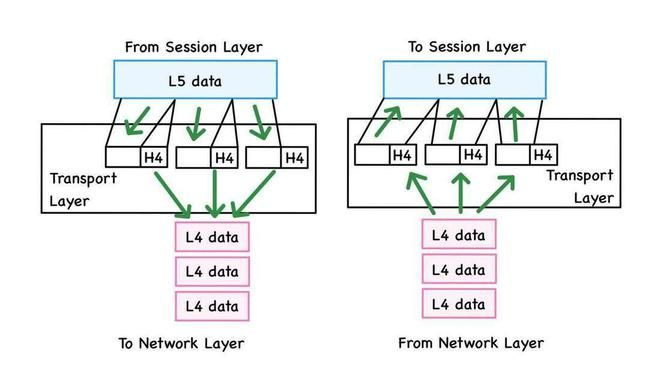
It is Layer 4 of the OSI Model
Lies between:
Network Layer (below)
Session Layer (above)
📌 Acts as a bridge between network and applications.
🧩 Key Responsibilities of Transport Layer
Let’s go one by one, very clearly 👇
📤 1. End-to-End (Process-to-Process) Delivery
🧠 What Does This Mean?
Network Layer → Host-to-host delivery
Transport Layer → Application-to-application delivery
📌 It ensures data reaches the correct process on the destination device.
🔢 2. Port Addressing
🧠 What is Port Addressing?
Each application is identified by a port number.
📌 Transport Layer uses:
IP address → Identify device
Port number → Identify application
🧠 Example
Application | Port Number |
|---|---|
HTTP | 80 |
HTTPS | 443 |
FTP | 21 |
SMTP | 25 |
📌 This allows multiple applications to communicate simultaneously.
✂️ 3. Segmentation & Reassembly
🧠 What is Segmentation?
Large data is broken into smaller units
These units are called segments
📌 Sender → Segmentation
📌 Receiver → Reassembly
🧠 Why Segmentation is Needed?
Easier transmission
Error handling
Efficient routing
❌ 4. Error Control
🧠 What Does Error Control Do?
Detects lost or damaged segments
Requests retransmission (if required)
📌 Ensures reliable communication.
🧠 Example
TCP detects missing segment
Requests sender to resend
🚦 5. Flow Control
🧠 What is Flow Control?
Flow control ensures:
Fast sender does not overwhelm slow receiver
📌 Transport Layer manages data flow end-to-end.
🧠 Example
Receiver buffer is small
Sender slows down transmission
🔁 6. Connection Control
🧠 Two Types of Services
The Transport Layer provides:
Connection-oriented service
Connectionless service
📌 This depends on the protocol used (TCP or UDP).
🔐 7. Reliable vs Unreliable Delivery
Transport Layer decides:
Whether delivery must be reliable
Or fast with minimum delay
📌 Example:
File download → Reliability required ✔️
Live video → Speed required ✔️
🧠 Transport Layer Protocols (Preview)
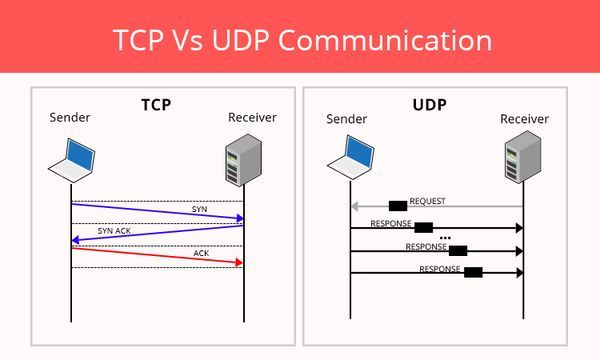
Protocol | Nature |
|---|---|
TCP | Reliable, connection-oriented |
UDP | Fast, connectionless |
📌 We’ll study TCP vs UDP in detail next.
📊 Transport Layer vs Network Layer (Quick Comparison)
Feature | Transport Layer | Network Layer |
|---|---|---|
Delivery | Process-to-process | Host-to-host |
Address Used | Port number | IP address |
Reliability | Yes / No | No |
Flow Control | Yes | No |
🧠 Why Transport Layer Is So Important
Without Transport Layer:
Applications cannot communicate ❌
Data reaches device but not application ❌
No reliability or flow control ❌
👉 Internet applications depend heavily on the Transport Layer.
✍️ Definitions
📌 Transport Layer:
The Transport Layer provides end-to-end communication, ensuring correct and efficient data delivery between applications.
📌 Main Role:
To deliver data from source application to destination application reliably or efficiently.
⭐ Advantages of Transport Layer
Reliable data delivery
Multiplexing & demultiplexing
Flow & error control
Application-level communication
⭐ One-Line Summary
🔹 The Transport Layer ensures reliable and efficient end-to-end communication between applications using port numbers and control mechanisms.