🤔 What is Encryption? (Basic Idea)
When data travels over a network, anyone in between can see it unless it is protected.
📌 Encryption hides the actual data so that only authorized users can understand it.
🧠 Simple Definition
📌 Encryption is the process of converting readable data (plaintext) into an unreadable form (ciphertext) using an algorithm and a key.
🧠 Why Encryption is Needed
Encryption protects data from:
🕵️ Eavesdropping
🔓 Unauthorized access
✍️ Data modification
💳 Identity theft
📌 Without encryption → data is exposed ❌
🧠 Real-Life Analogy
📦 Locked Box Example
Message written on paper ✉️
Put inside a locked box 🔒
Only person with the key can open it 🗝️
👉 Encryption = Locking the data
👉 Decryption = Unlocking the data
🔁 Basic Encryption Process
1️⃣ Sender has Plaintext
2️⃣ Encryption algorithm + Key applied
3️⃣ Plaintext → Ciphertext
4️⃣ Ciphertext sent over network
5️⃣ Receiver uses key to Decrypt
6️⃣ Original plaintext recovered
🧾 Important Terms
Term | Meaning |
|---|---|
Plaintext | Original readable data |
Ciphertext | Encrypted unreadable data |
Encryption | Converting plaintext to ciphertext |
Decryption | Converting ciphertext to plaintext |
Key | Secret value used for encryption/decryption |
Algorithm | Mathematical method used |
🔐 Types of Encryption
Encryption is mainly classified into two types:
1️⃣ Symmetric Key Encryption
2️⃣ Asymmetric Key Encryption
🔑 1. Symmetric Key Encryption
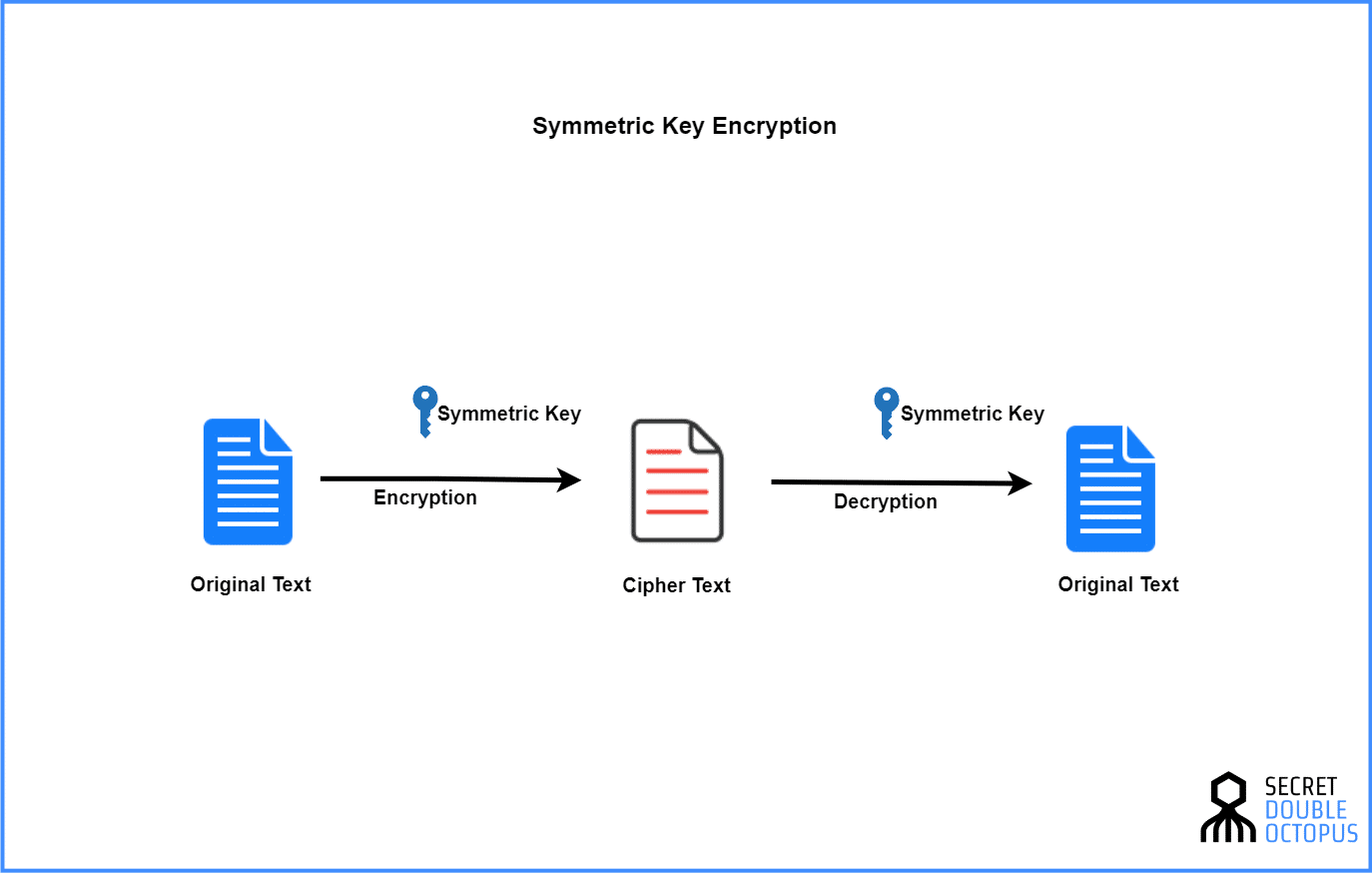
🧠 What is Symmetric Encryption?
📌 Same key is used for both encryption and decryption.
👉 Sender and receiver must share the secret key.
🧠 Example
Lock 🔒 and key 🗝️ are same
Anyone with the key can open it
📌 Popular Symmetric Algorithms
AES (Advanced Encryption Standard)
DES (Data Encryption Standard)
3DES
✅ Advantages
Very fast ⚡
Efficient for large data
❌ Disadvantages
Key sharing problem
If key is stolen → data compromised
🔓 2. Asymmetric Key Encryption
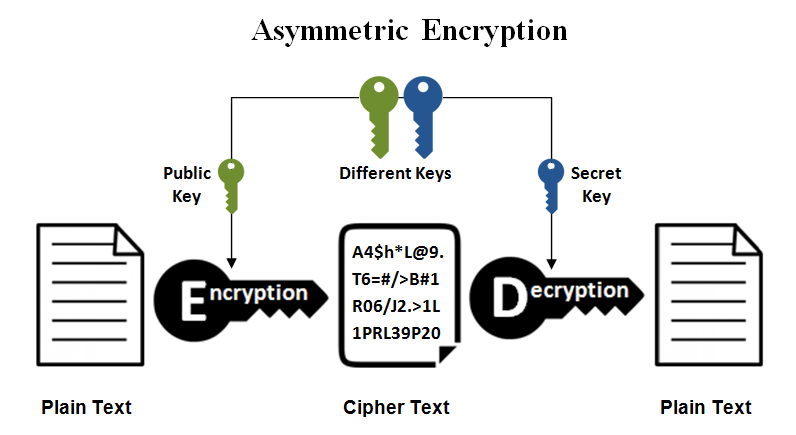
🧠 What is Asymmetric Encryption?
📌 Uses two different keys:
Public Key 🔓
Private Key 🔐
🧠 How It Works
Public key encrypts data
Private key decrypts data
📌 Keys are mathematically related.
🧠 Example
Public mailbox 📮 (anyone can drop letters)
Private key 🔑 (only owner can open)
📌 Popular Asymmetric Algorithms
RSA
ECC
Diffie-Hellman
✅ Advantages
Secure key exchange
No shared secret problem
❌ Disadvantages
Slower than symmetric
More computational power
⚖️ Symmetric vs Asymmetric Encryption
Feature | Symmetric | Asymmetric |
|---|---|---|
Keys | One key | Two keys |
Speed | Fast | Slow |
Security | Medium | High |
Key Sharing | Required | Not required |
Usage | Bulk data | Key exchange |
🧠 Hybrid Encryption (Real-World Use)
📌 In practice, systems use both types.
Example: HTTPS
1️⃣ Asymmetric encryption → exchange key
2️⃣ Symmetric encryption → transfer data
👉 Best of both worlds ✔️
🔍 Encryption and Security Goals
Security Goal | How Encryption Helps |
|---|---|
Confidentiality | Hides data |
Integrity | Detects modification |
Authentication | Verifies sender |
Non-repudiation | Prevents denial |
🧠 Encryption in Daily Life
HTTPS 🔒
Online banking 💳
Email security 📧
VPN 🌐
Cloud storage ☁️
📌 Encryption is everywhere.
⚠️ Encryption is NOT Enough Alone
Encryption:
Protects data ✔️
Does not stop DoS ❌
Does not stop malware ❌
👉 Must be combined with:
Firewalls
Authentication
IDS/IPS
🧠 Memory Tricks
Plaintext = Readable 📖
Ciphertext = Scrambled 🔐
Symmetric = Same key
Asymmetric = Two keys
⭐ One-Line Summary
🔹 Encryption protects data by converting it into an unreadable form using keys, ensuring confidentiality and secure communication.