🤔 What is a Firewall? (Basic Idea)
When a network is connected to the Internet 🌍, it is exposed to:
Hackers 🕵️
Malware 🦠
Unauthorized users 🚫
📌 A firewall acts like a security guard between your network and the outside world.
🧠 Simple Definition
📌 A firewall is a hardware or software-based security system that monitors and controls incoming and outgoing network traffic based on predefined security rules.
🧠 Real-Life Analogy
🚪 Security Gate Example
Only authorized people are allowed inside
Guards check ID before entry
👉 Firewall:
Checks data packets
Allows or blocks them based on rules
🧭 Where is a Firewall Placed?
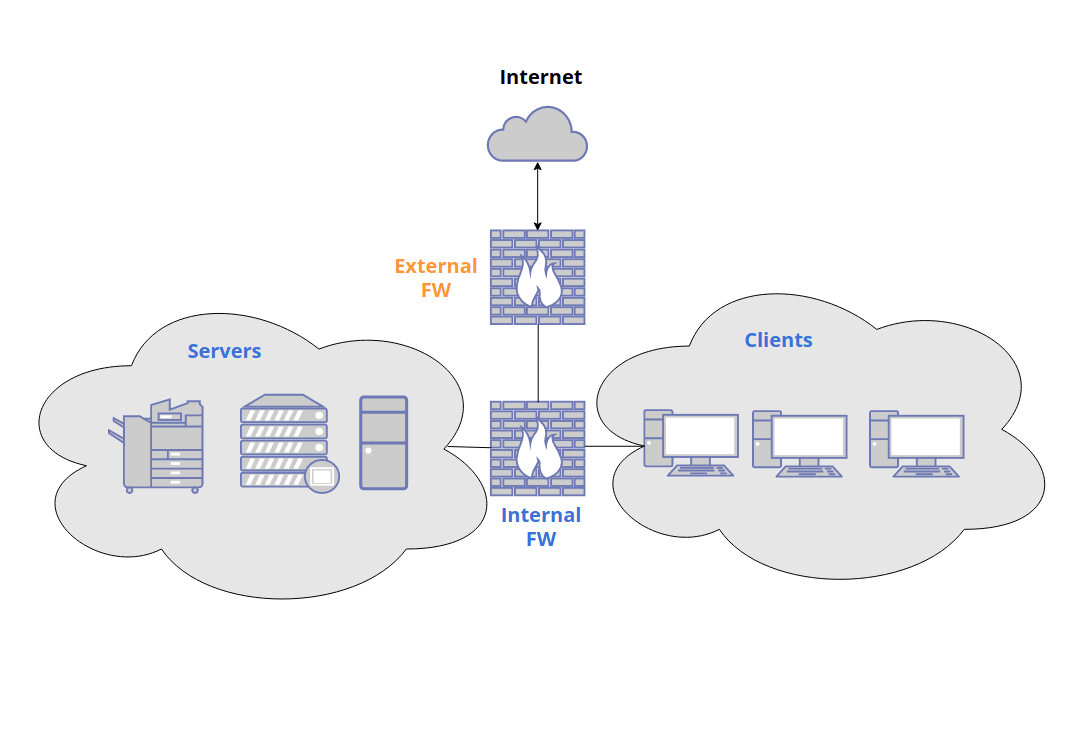
A firewall is usually placed:
Between internal network and Internet
Between trusted and untrusted networks
📌 It acts as a barrier.
🎯 Why Firewalls Are Needed
Firewalls help to:
🔐 Protect internal network
🚫 Block unauthorized access
🛡️ Prevent attacks
📜 Enforce security policies
📊 Monitor traffic
📌 Without firewall → network is exposed ❌
🧩 How a Firewall Works (Simple Flow)
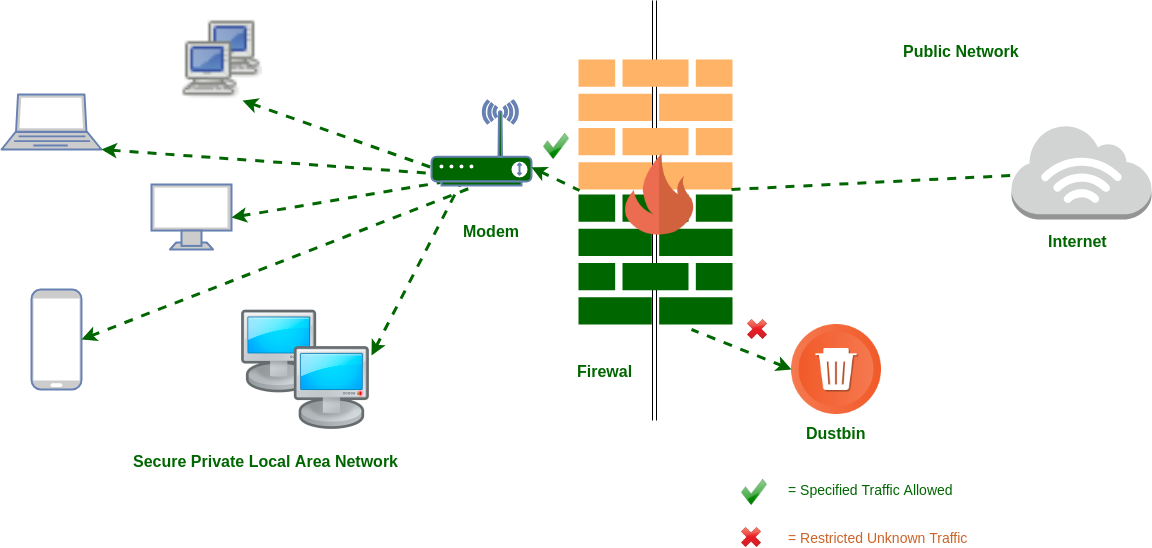
1️⃣ Packet enters firewall
2️⃣ Firewall checks rules
3️⃣ If rule matches → Allow
4️⃣ If rule violates → Block
📌 Decision happens in milliseconds ⚡
🧱 Types of Firewalls
Firewalls are classified based on how they inspect traffic.
🧾 1. Packet Filtering Firewall
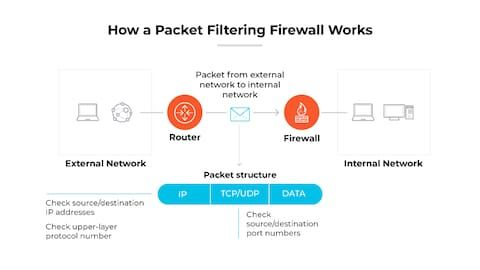
🧠 What is Packet Filtering?
Checks packet headers only
Based on:
Source IP
Destination IP
Port number
Protocol
📌 Works at Network Layer & Transport Layer.
✅ Advantages
Simple
Fast
Low cost
❌ Disadvantages
No payload inspection
Vulnerable to spoofing
🔄 2. Stateful Inspection Firewall
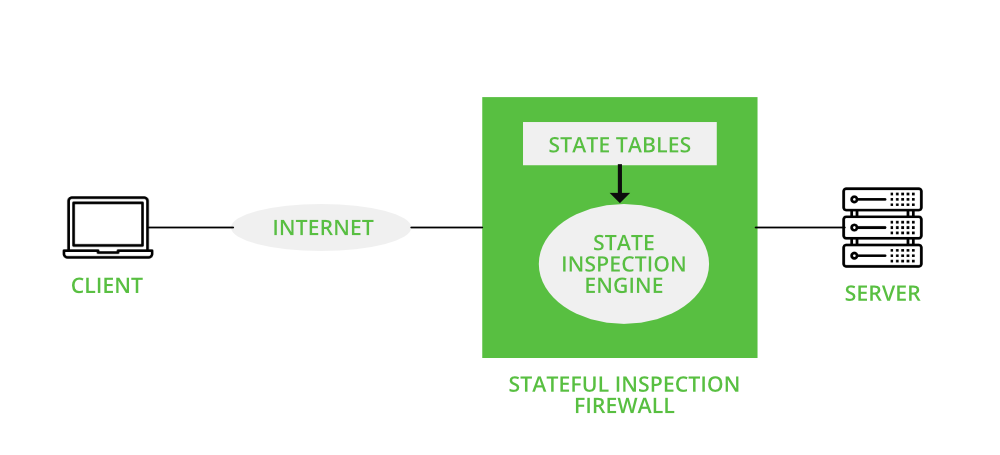
🧠 What is Stateful Firewall?
Tracks state of connections
Maintains a state table
📌 Knows whether a packet is:
New
Part of an existing connection
✅ Advantages
More secure than packet filtering
Blocks fake packets
❌ Disadvantages
More resource usage
🧑💻 3. Application Layer Firewall (Proxy Firewall)
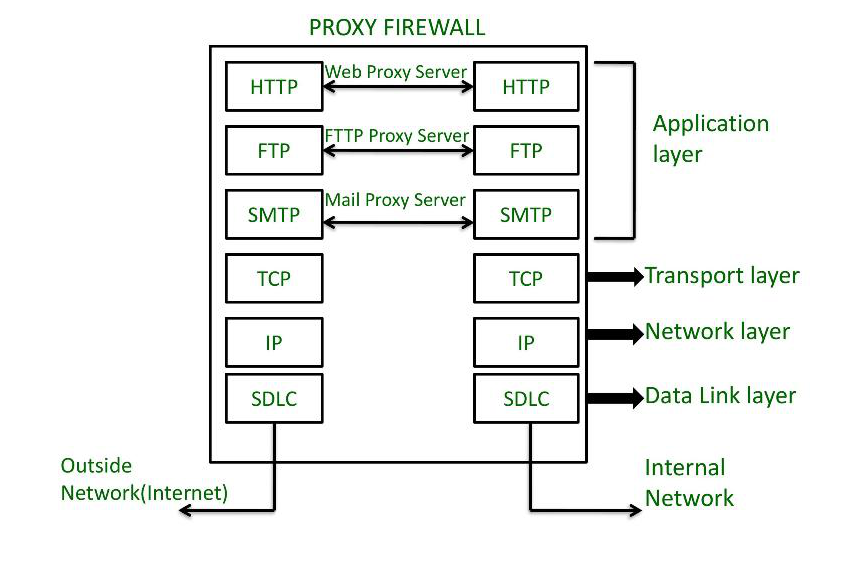
🧠 What is Application Firewall?
Works at Application Layer
Inspects actual data content
📌 Acts as an intermediary (proxy).
✅ Advantages
Very secure
Blocks malicious content
❌ Disadvantages
Slower
Complex configuration
🌐 4. Next-Generation Firewall (NGFW)
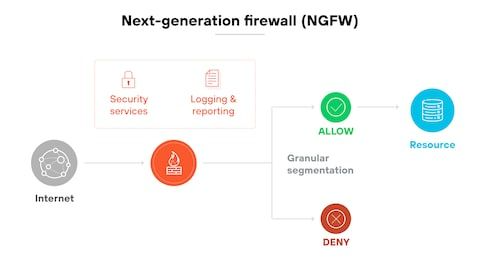
🧠 What is NGFW?
Combines:
Packet filtering
Stateful inspection
Application awareness
Intrusion prevention
📌 Used in modern enterprise networks.
✅ Features
Deep packet inspection
Malware protection
Application control
🧠 Hardware vs Software Firewalls
🧱 Hardware Firewall
Physical device
Used in organizations
Protects entire network
💻 Software Firewall
Installed on individual systems
Protects single device
📌 Example: Windows Firewall
⚖️ Firewall Types Comparison
Type | Layer | Security | Speed |
|---|---|---|---|
Packet Filtering | L3/L4 | Low | Very Fast |
Stateful | L3/L4 | Medium | Fast |
Application | L7 | High | Slow |
NGFW | Multi-layer | Very High | Moderate |
🚫 What Firewalls Can Do
Allow or block traffic ✔️
Control ports & protocols ✔️
Log traffic ✔️
❌ What Firewalls Cannot Do
Cannot stop internal attacks ❌
Cannot prevent malware already inside ❌
Cannot replace antivirus ❌
📌 Firewall is one layer of security, not complete protection.
🛡️ Firewall Rules Example
ALLOW TCPfrom192.168.1.0/24toany port80
DENYall incoming traffic
📌 Rules are evaluated top to bottom.
🧠 Memory Tricks
Packet Filter = Header only 📦
Stateful = Remembers 🔁
Proxy = Middleman 🤝
NGFW = All-in-one 🧠
⭐ One-Line Summary
🔹 A firewall protects a network by filtering traffic based on security rules and preventing unauthorized access.