🤔 What is the TCP/IP Model?
The TCP/IP Model is a practical networking model that explains how data communication happens on the Internet.
📌 TCP/IP stands for:
TCP → Transmission Control Protocol
IP → Internet Protocol
👉 It is the foundation of the Internet 🌐.
🧠 Why TCP/IP Model Was Needed?
Although the OSI Model explains networking very well, it is:
Theoretical 📘
Not directly implemented
The TCP/IP Model was created to:
Actually implement networking
Support real communication
Enable the Internet
📌 In short:
OSI explains networking, TCP/IP does networking.
🏗️ Number of Layers in TCP/IP Model
The TCP/IP Model has 4 layers (sometimes shown as 5, but 4 is standard).
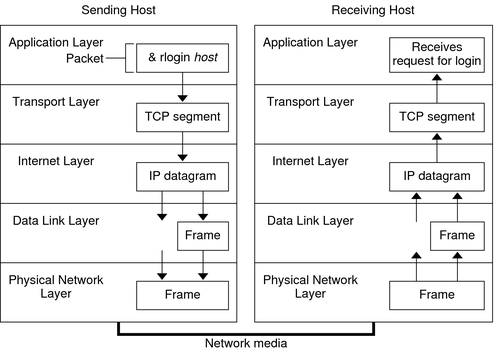
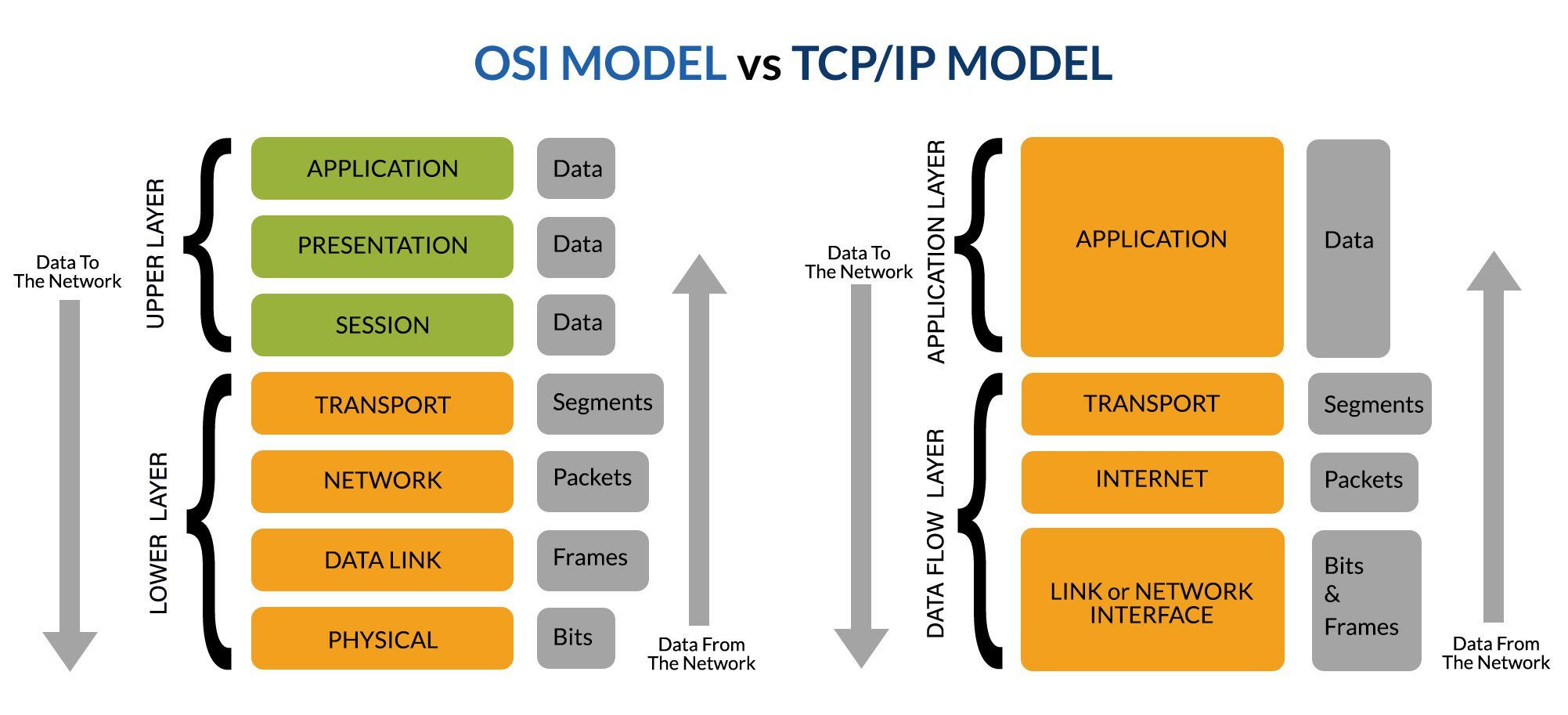
Layer No | Layer Name |
|---|---|
4️⃣ | Application Layer |
3️⃣ | Transport Layer |
2️⃣ | Internet Layer |
1️⃣ | Network Access Layer |
🧭 How Data Flows in TCP/IP Model
🔽 Sender side → Data flows top to bottom
🔼 Receiver side → Data flows bottom to top
👉 Same idea as OSI, but fewer layers.
🔝 Layer 4: Application Layer
Provides services directly to user applications.
📌 This layer combines three OSI layers:
Application
Presentation
Session
User interaction with network
Data formatting
Session handling
Encryption (if required)
HTTP / HTTPS 🌐
FTP 📂
SMTP 📧
POP3 / IMAP
DNS
Opening a website in a browser.
🚚 Layer 3: Transport Layer
Provides end-to-end communication between sender and receiver.
📌 Ensures data reaches the correct application.
Segmentation
Flow control
Error control
Port addressing
TCP → Reliable, connection-oriented
UDP → Fast, connectionless
TCP → File download 📂
UDP → Live video streaming 🎥
🌍 Layer 2: Internet Layer
Responsible for logical addressing and routing.
📌 This layer decides where data should go.
IP addressing
Packet routing
Packet forwarding
IP
ICMP
ARP
Choosing the best road route to reach a city.
🔌 Layer 1: Network Access Layer
Handles physical transmission of data.
📌 Combines Physical + Data Link layers of OSI.
Framing
MAC addressing
Signal transmission
Error detection
Ethernet
Wi-Fi
Cables
NIC
🧠 TCP/IP vs OSI Model
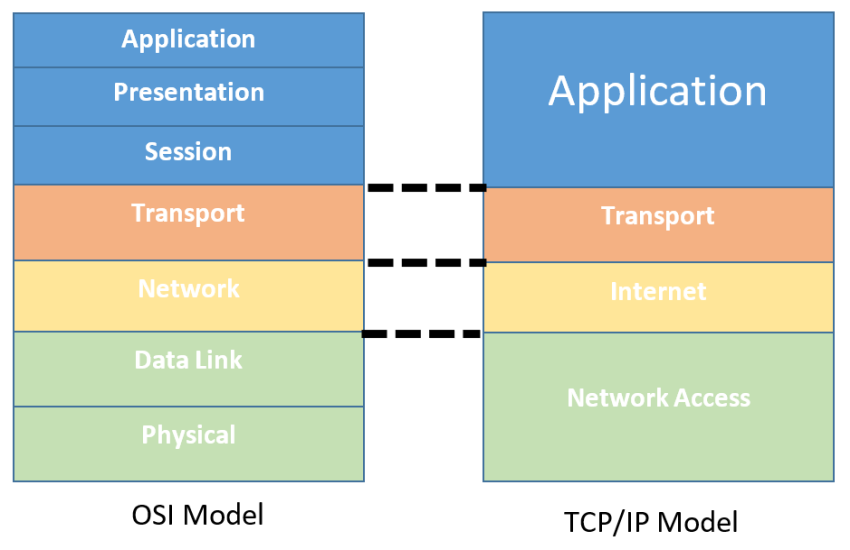
Feature | OSI Model | TCP/IP Model |
|---|---|---|
Layers | 7 | 4 |
Nature | Theoretical | Practical |
Developed by | ISO | DARPA |
Used in Internet | ❌ No | ✅ Yes |
Flexibility | Less | More |
🧩 Layer Mapping (Easy Understanding)
OSI Layers | TCP/IP Layer |
|---|---|
Application + Presentation + Session | Application |
Transport | Transport |
Network | Internet |
Data Link + Physical | Network Access |
⭐ Advantages of TCP/IP Model
Simple structure
Highly scalable
Supports internetworking
Industry standard
Reliable and efficient
❌ Limitations of TCP/IP Model
No clear separation of layers
Less descriptive than OSI
Session & presentation layers missing
✍️ Definitions
📌 TCP/IP Model:
A four-layer networking model that defines how data is transmitted over the Internet using TCP and IP protocols.
⭐ One-Line Summary
🔹 The TCP/IP Model is a practical 4-layer model that forms the backbone of Internet communication.