🤔 What is a Routing Algorithm? (Basic Idea)
A routing algorithm is a set of rules and calculations used by routers to:
Find the best path
Decide where to forward packets
Update routing tables automatically
📌 In simple words:
Routing algorithms help routers choose the smartest route for data.
🧠 Real-Life Analogy
🗺️ Google Maps Navigation
Many routes available
Shortest, fastest, or least traffic route chosen
Route changes if traffic changes
👉 Routers use routing algorithms the same way.
🎯 Why Routing Algorithms Are Needed
Routing algorithms help to:
🚀 Deliver data efficiently
🔄 Adapt to network changes
❌ Avoid routing loops
📉 Reduce congestion
🌍 Scale to large networks (Internet)
Without routing algorithms:
Routers cannot decide paths ❌
Network becomes unreliable ❌
📍 Where Are Routing Algorithms Used?
Implemented in routing protocols
Used at the Network Layer
Executed inside routers
🧩 Key Properties of a Good Routing Algorithm
A good routing algorithm should be:
✔️ Correct
⚡ Fast convergence
📈 Scalable
🔁 Loop-free
🧠 Adaptive to failures
🧭 Types of Routing Algorithms
Routing algorithms are mainly classified into:
1️⃣ Shortest Path Algorithm
2️⃣ Distance Vector Routing Algorithm
3️⃣ Link State Routing Algorithm
4️⃣ Flooding Algorithm
We’ll explain each one clearly 👇
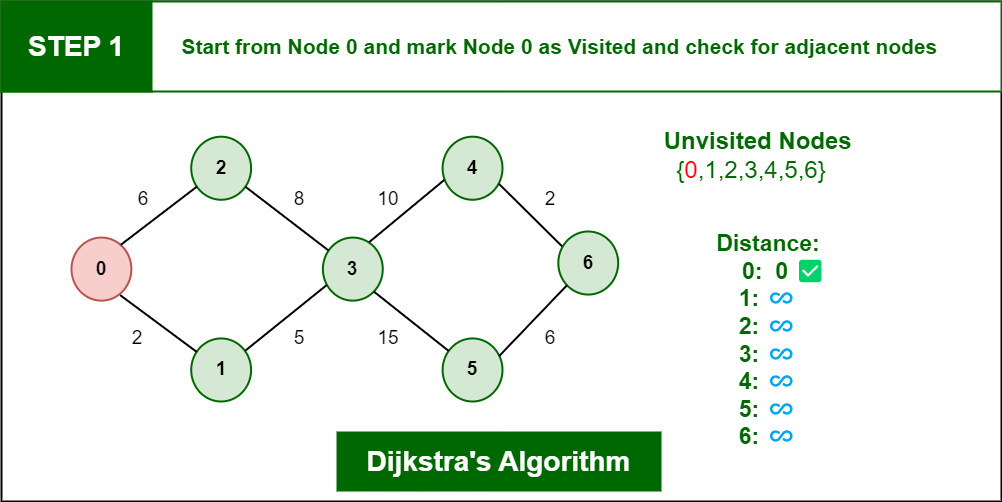
🛣️ 1. Shortest Path Routing Algorithm
🔹 Basic Idea
Selects the path with the minimum cost between source and destination.
📌 Cost can be based on:
Distance
Delay
Bandwidth
Hop count
🧠 Example
If:
Path A → Cost = 10
Path B → Cost = 5
👉 Path B is selected.
⭐ Advantages
Simple concept
Efficient routing
Optimal path selection
📌 Used as the foundation of other algorithms.
🔁 2. Distance Vector Routing Algorithm
🔹 Basic Idea
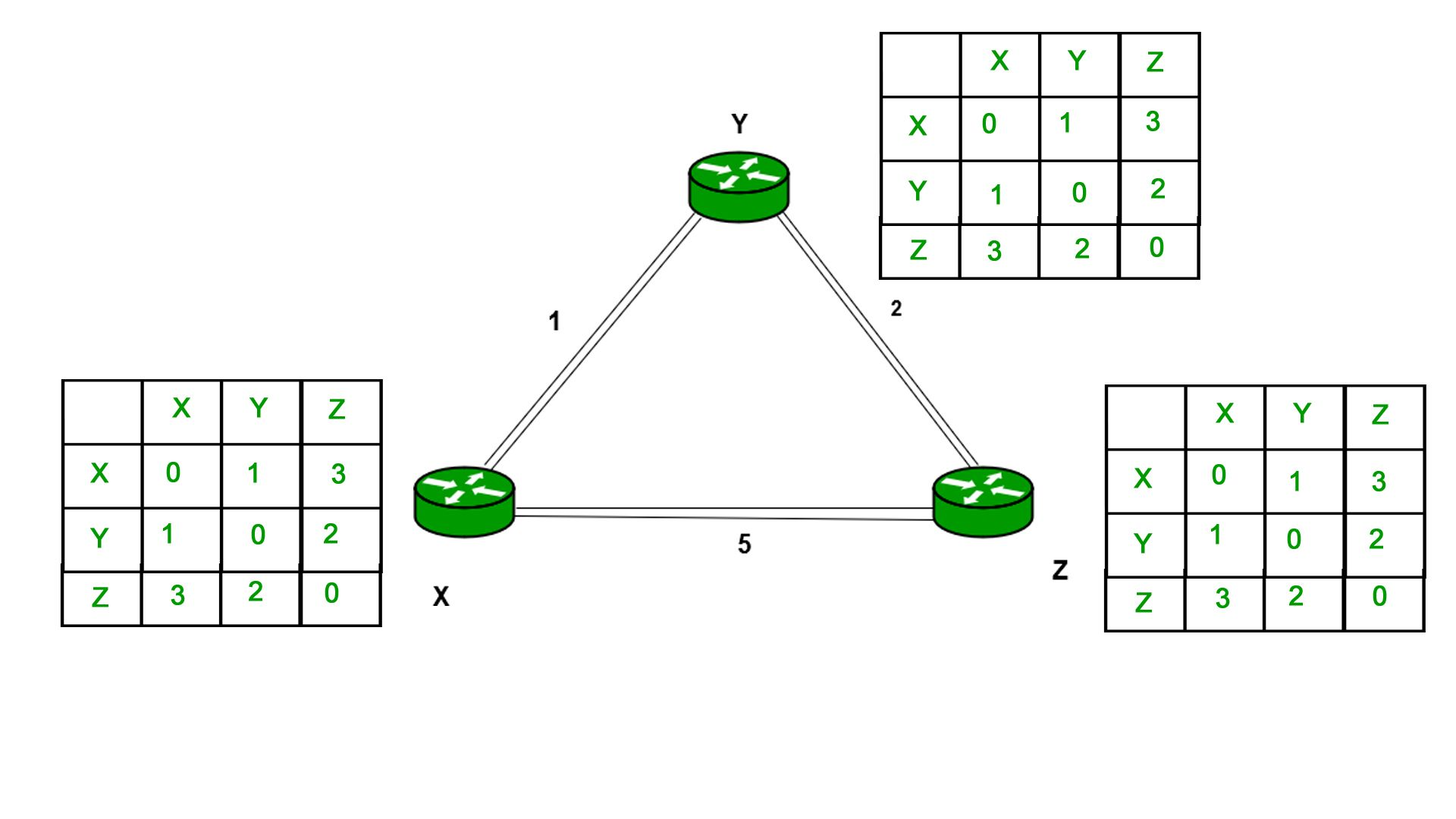
Each router knows:
Distance to destination
Direction (next hop)
📌 Routers share routing tables with neighbors only.
🧠 How It Works (Step-by-Step)
1️⃣ Router initializes its table
2️⃣ Shares table with neighbors
3️⃣ Receives neighbors’ tables
4️⃣ Updates routes if shorter path found
5️⃣ Repeats periodically
🧮 Metric Used
Hop count (mostly)
📌 Example protocol: RIP
❌ Problems
Slow convergence
Routing loops
Count-to-infinity problem
🛠️ Solutions
Split horizon
Poison reverse
Hold-down timers
✅ Advantages
Simple
Low computation
🌐 3. Link State Routing Algorithm
🔹 Basic Idea
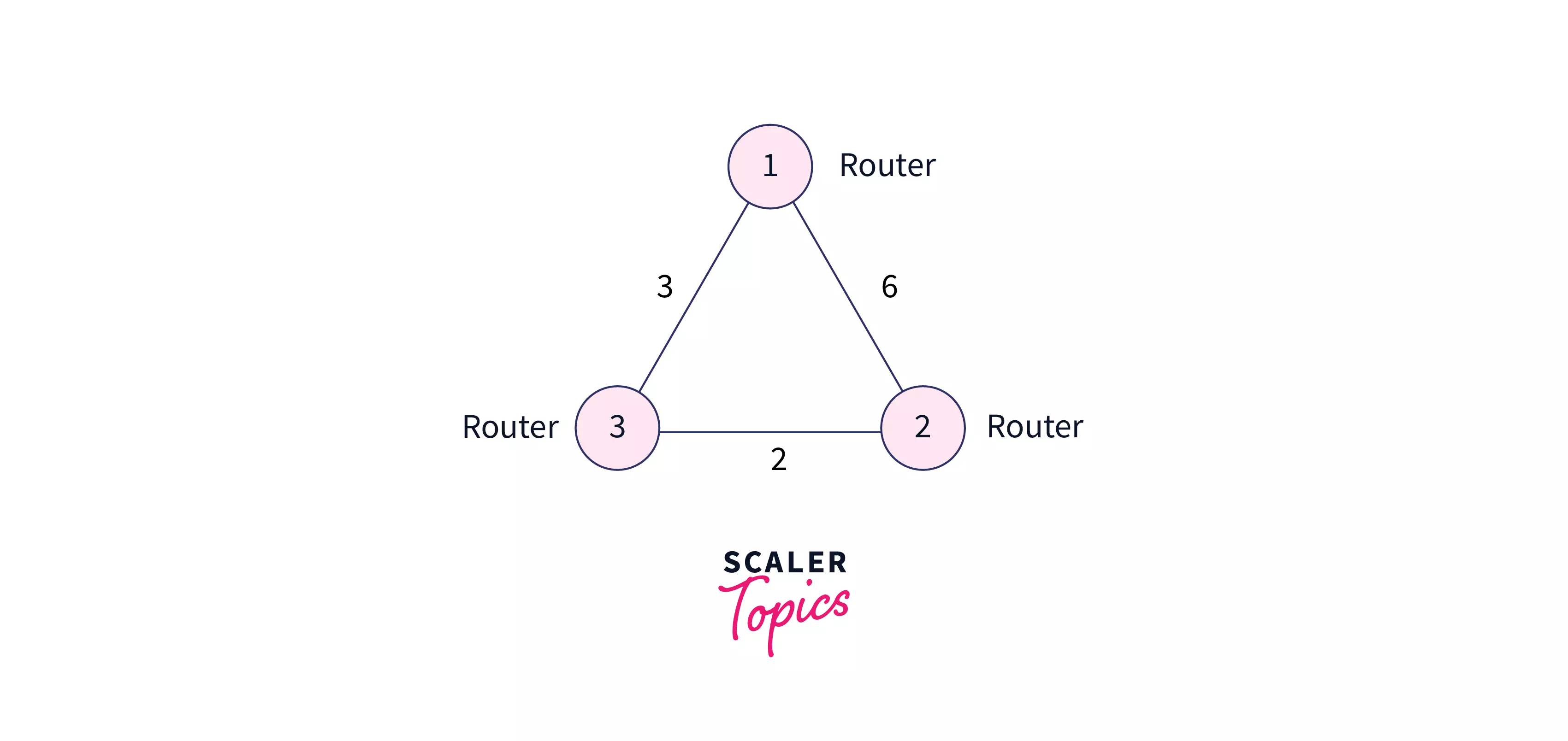
Each router knows the entire network topology.
📌 Routers exchange link state information instead of full tables.
🧠 How It Works (Step-by-Step)
1️⃣ Discover neighbors
2️⃣ Measure link cost
3️⃣ Flood link state packets (LSPs)
4️⃣ Build topology map
5️⃣ Run shortest path algorithm
🧮 Algorithm Used
Dijkstra’s Algorithm
📌 Example protocol: OSPF
✅ Advantages
Fast convergence ⚡
Accurate routing
No routing loops
❌ Disadvantages
High memory usage
Complex implementation
High CPU usage
🌊 4. Flooding Algorithm
🔹 Basic Idea
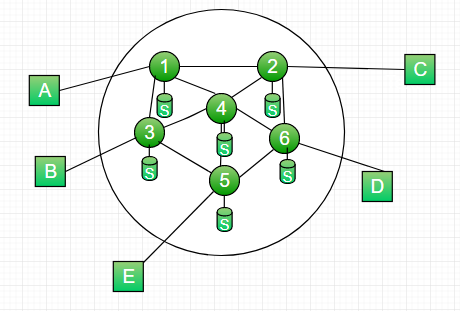
Every incoming packet is sent on all outgoing links except the one it arrived on.
📌 No routing table required.
🧠 Use Cases
Network discovery
Emergency message delivery
❌ Problems
Heavy traffic
Duplicate packets
Congestion
📌 Controlled using:
Hop count
Sequence numbers
📊 Comparison of Routing Algorithms
Algorithm | Knowledge | Speed | Loop Issue | Example |
|---|---|---|---|---|
Shortest Path | Partial | Fast | No | Dijkstra |
Distance Vector | Neighbor only | Slow | Yes | RIP |
Link State | Full topology | Fast | No | OSPF |
Flooding | None | – | No | Discovery |
🧠 Distance Vector vs Link State (Very Important)
Feature | Distance Vector | Link State |
|---|---|---|
Information Shared | Routing table | Link states |
Knowledge | Partial | Complete |
Convergence | Slow | Fast |
Complexity | Low | High |
Example | RIP | OSPF |
🔄 Routing Algorithm & Routing Protocol Relationship
📌 Routing Algorithm → Logic / method
📌 Routing Protocol → Implementation
Example:
Algorithm → Link State
Protocol → OSPF
🧠 Routing Algorithm Selection Depends On
Network size
Traffic load
Speed requirement
Hardware capacity
Reliability needs
⭐ One-Line Summary
🔹 Routing algorithms determine the most efficient path for data packets across networks by using metrics and network information.