🤔 What is Routing? (Basic Idea)
In a network, data usually does not travel directly from sender to receiver.
📌 Instead:
Data passes through multiple intermediate devices
These devices decide where to send the data next
👉 This entire process is called Routing.
🧠 Simple Definition
📌 Routing is the process of selecting the best path for data packets to travel from source to destination across one or more networks.
🧠 Real-Life Analogy
🚗 Google Maps Example
You want to go from City A to City B
There are many roads
Google Maps chooses the best route
📌 Routers do the same job for data packets.
📍 Where Does Routing Happen?
Routing is performed at the Network Layer
Main device involved → Router
📌 Switches work inside a LAN,
📌 Routers work between networks.
🧭 Why Routing Is Needed
Routing is needed because:
🌍 Internet has millions of networks
📦 Data must cross multiple networks
🔁 Multiple paths may exist
⚡ Best path must be selected
Without routing:
Internet will not work ❌
Inter-network communication fails ❌
📦 Routing vs Forwarding (Very Important Difference)
Routing | Forwarding |
|---|---|
Decides the path | Sends packet to next hop |
Control plane | Data plane |
Happens less often | Happens for every packet |
📌 Routing decides, forwarding delivers.
🧠 Key Components of Routing
Routing depends on:
1️⃣ IP Address
2️⃣ Routing Table
3️⃣ Routing Protocols
4️⃣ Metrics
📑 What is a Routing Table?
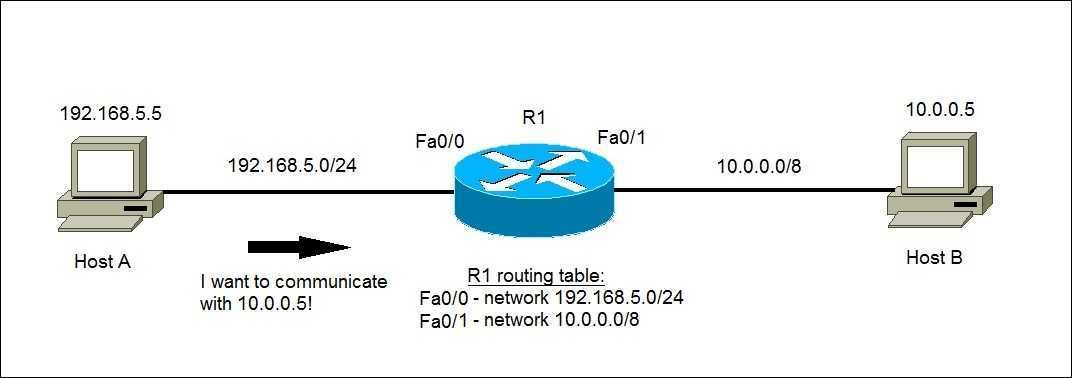
A Routing Table is a data structure stored in a router that contains:
Destination network
Next hop
Interface
Metric (cost)
📌 Router uses this table to forward packets correctly.
🧠 Simple Example Entry
Destination | Next Hop | Interface |
|---|---|---|
192.168.2.0/24 | 10.0.0.2 | eth0 |
🧮 What is a Metric?
A metric is a value that helps a router choose the best path.
📌 Lower metric = better path.
🧠 Common Metrics
Hop count
Bandwidth
Delay
Cost
Reliability
🔁 Types of Routing
Routing is broadly classified into:
1️⃣ Static Routing
2️⃣ Dynamic Routing
3️⃣ Default Routing
📌 1. Static Routing
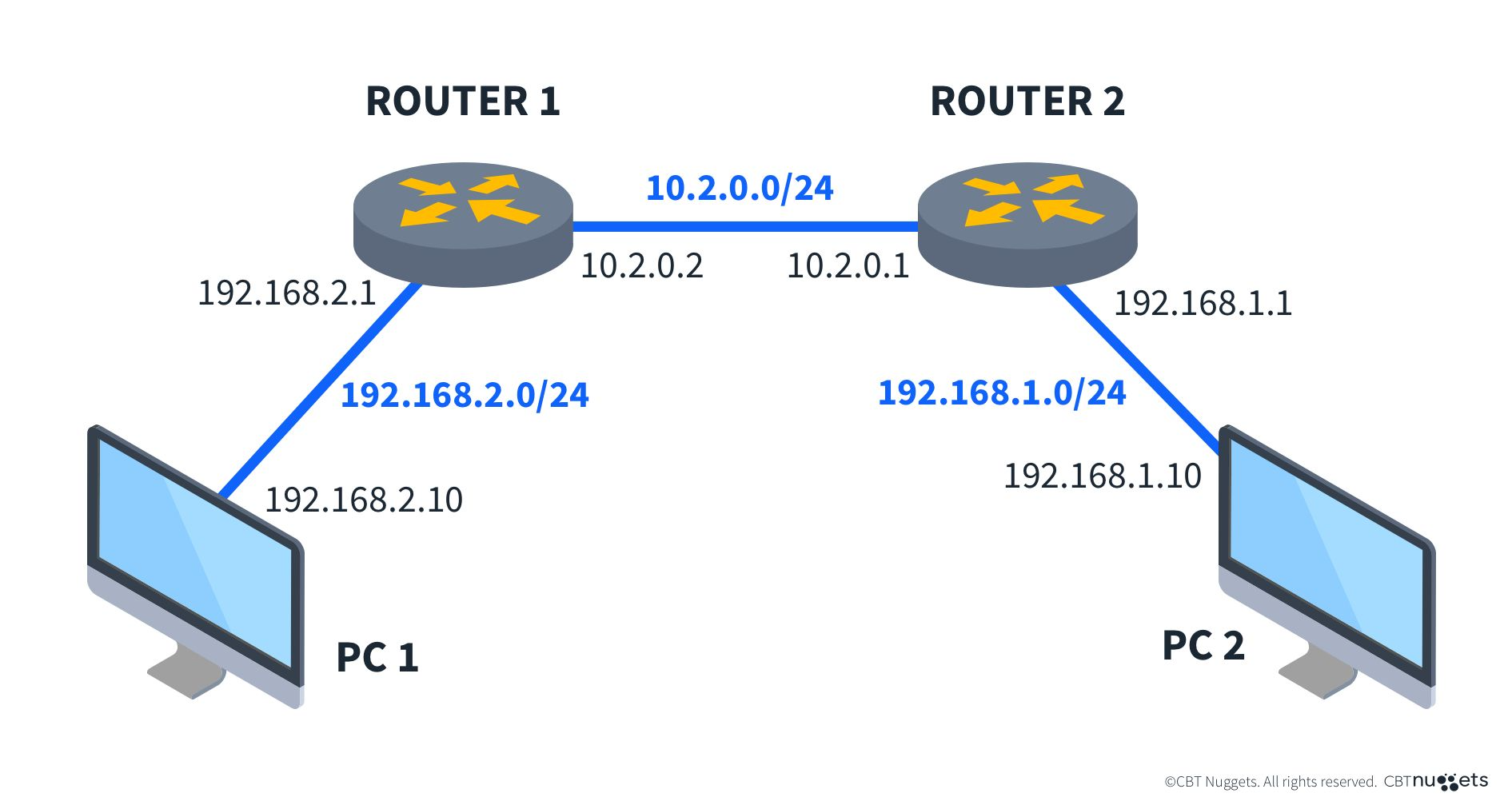
🔹 What is Static Routing?
Routes are manually configured by the network administrator.
📌 Router does not change routes automatically.
Simple
Secure
No overhead
Not scalable
Manual updates required
Not suitable for large networks
📌 Used in small or stable networks.
🔄 2. Dynamic Routing
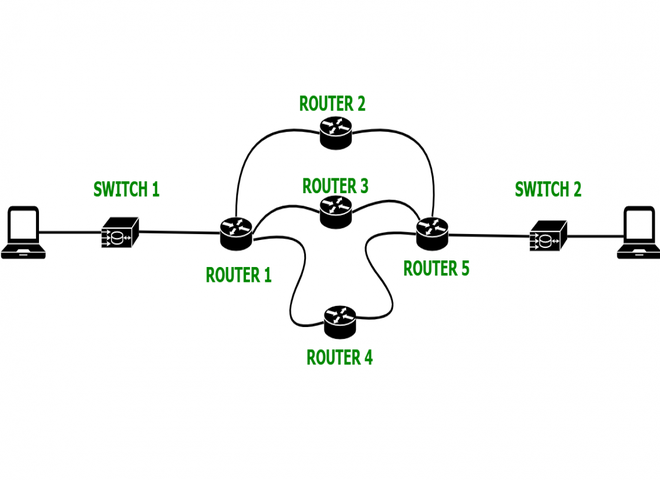
🔹 What is Dynamic Routing?
Routers automatically learn and update routes using routing protocols.
📌 Adapts to network changes.
🧠 Examples of Routing Protocols
RIP
OSPF
BGP
Scalable
Automatic updates
Fault tolerant
Complex
Uses bandwidth
More CPU & memory
📌 Used in medium & large networks.
🚪 3. Default Routing
🔹 What is Default Routing?
Used when:
No specific route is found
Packet is sent to a default gateway
📌 Example:
0.0.0.0/0🧠 Real-Life Example
If you don’t know the address → go to main post office.
🧠 Routing Protocol Categories
🔹 Interior Gateway Protocols (IGP)
Used within an organization
Examples: RIP, OSPF
🔹 Exterior Gateway Protocols (EGP)
Used between organizations
Example: BGP
🧭 Distance Vector vs Link State (Concept Only)
Feature | Distance Vector | Link State |
|---|---|---|
Knowledge | Neighbor info | Full topology |
Speed | Slow | Fast |
Example | RIP | OSPF |
📌 Detailed algorithms come next.
🔄 Routing Loop (Common Problem)
A routing loop occurs when:
Packet circulates endlessly
Never reaches destination
📌 Caused by:
Incorrect routing tables
Slow convergence
👉 Solved using routing algorithms.
🧠 Routing Process (Step-by-Step)
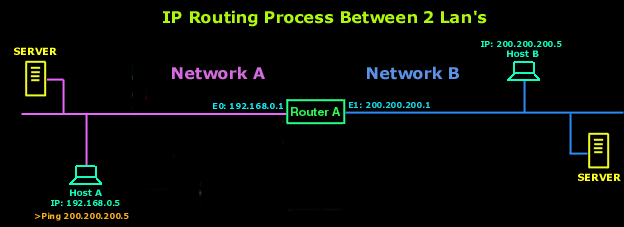
1️⃣ Packet arrives at router
2️⃣ Router checks destination IP
3️⃣ Looks into routing table
4️⃣ Selects best route
5️⃣ Forwards packet to next hop
⭐ Advantages of Routing
Efficient data delivery
Supports large networks
Fault tolerance
Enables Internet communication
⭐ One-Line Summary
🔹 Routing enables data packets to travel across multiple networks by selecting the best possible path.