🤔 What is Transmission Media?
Transmission Media is the physical path through which data travels from one device to another in a computer network.
📌 Data can travel in the form of:
⚡ Electrical signals
💡 Light signals
🧭 Classification of Transmission Media
Transmission media is mainly divided into:
1️⃣ Guided Media (Wired Media)
2️⃣ Unguided Media (Wireless Media)
👉 In this topic, we focus only on Guided Media.
🧵 What is Guided Media?
Guided Media means data travels through a physical cable or wire.
📌 The signal is guided along a fixed path.
🧠 Real-Life Analogy
Think of water flowing through pipes 🚰
Pipe = Cable
Water = Data
📌 Types of Guided Transmission Media
There are three main types of guided media:
1️⃣ Twisted Pair Cable
2️⃣ Coaxial Cable
3️⃣ Fiber Optic Cable
We’ll study each one deeply 👇
🔗 Twisted Pair Cable
🔹 What is Twisted Pair Cable?
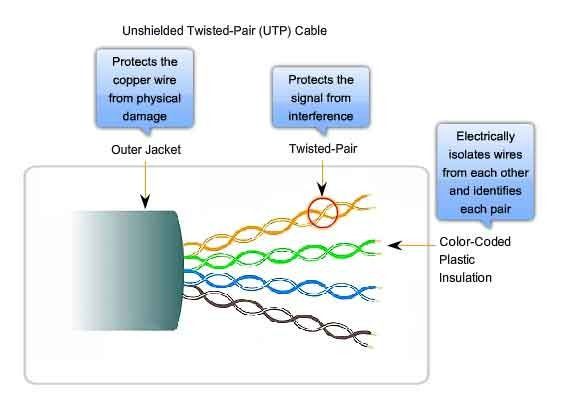
A Twisted Pair Cable consists of two insulated copper wires twisted together.
📌 Twisting helps reduce electromagnetic interference (noise).
🧠 Why Twisting is Important?
Reduces signal loss
Minimizes interference
Improves signal quality
🧩 Types of Twisted Pair Cable
🔸 a) UTP – Unshielded Twisted Pair
No shielding
Cheap
Most commonly used
📌 Used in:
LAN networks
Telephone lines
Ethernet cables
🔸 b) STP – Shielded Twisted Pair
Extra shielding
Better protection
Costly
📌 Used in:
High-interference areas
Industrial environments
⭐ Advantages
Low cost 💰
Easy installation
Flexible
❌ Disadvantages
Limited distance
Lower speed than fiber
Affected by noise
📺 Coaxial Cable
🔹 What is Coaxial Cable?
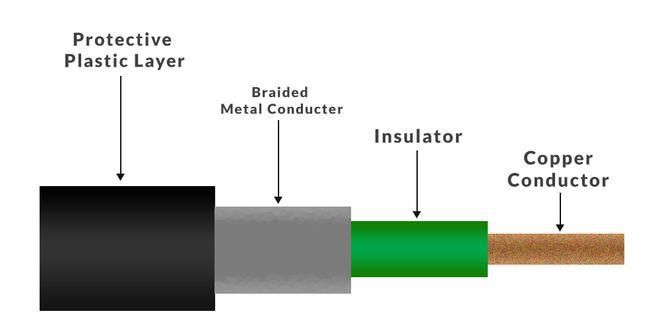
A Coaxial Cable has a single copper conductor at the center surrounded by insulation and shielding.
📌 It provides better noise protection than twisted pair.
🧠 Structure (Inside the Cable)
1️⃣ Inner conductor (copper)
2️⃣ Insulating layer
3️⃣ Metallic shield
4️⃣ Outer plastic cover
🧑💻 Common Uses
Cable TV 📺
Broadband Internet
CCTV systems
⭐ Advantages
Better signal quality
Higher bandwidth than twisted pair
Less noise
❌ Disadvantages
Costlier than twisted pair
Bulky
Difficult to install
💡Fiber Optic Cable
🔹 What is Fiber Optic Cable?
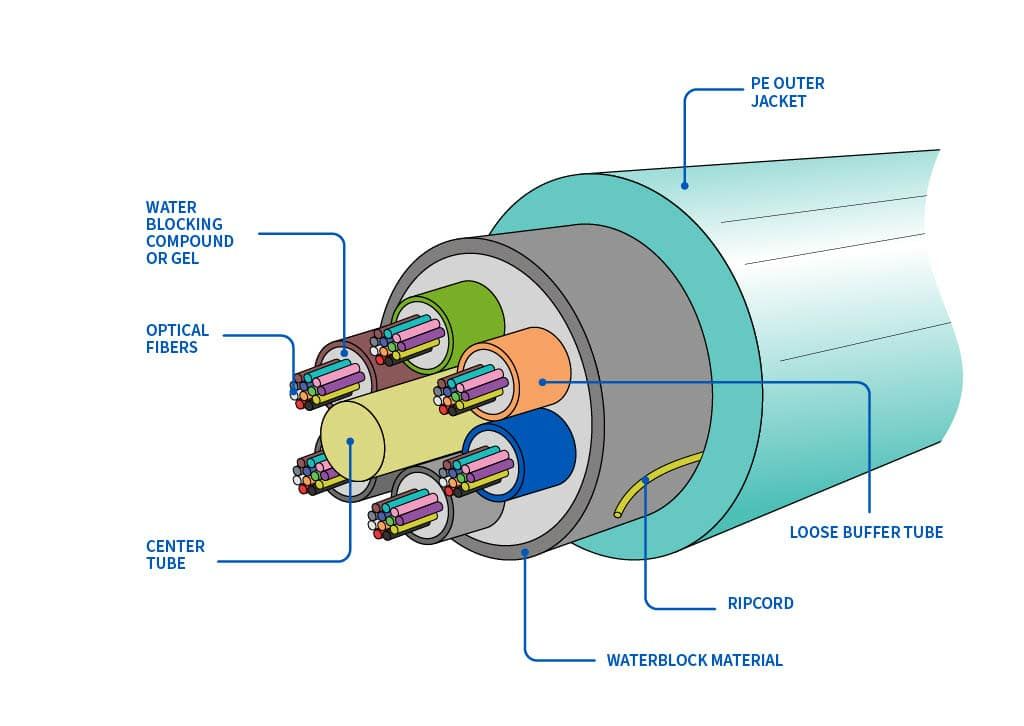
A Fiber Optic Cable transmits data using light signals instead of electrical signals.
📌 It is made of glass or plastic fibers.
🧠 How Fiber Optic Works (Simple)
Data converted into light
Light travels through fiber
No electrical interference
🧩 Types of Fiber Optic Cable
🔸 a) Single-Mode Fiber
Long distance
High speed
Used in WAN & Internet backbone
🔸 b) Multi-Mode Fiber
Short distance
Used in LAN & data centers
⭐ Advantages
Very high speed 🚀
Long distance transmission
Immune to interference
Very secure 🔐
❌ Disadvantages
Expensive
Difficult installation
Fragile
📊 Comparison Table (Very Important for Exams)
Feature | Twisted Pair | Coaxial | Fiber Optic |
|---|---|---|---|
Signal Type | Electrical | Electrical | Light |
Speed | Low–Medium | Medium | Very High |
Distance | Short | Medium | Very Long |
Cost | Low | Medium | High |
Interference | High | Low | None |
Usage | LAN | TV, CCTV | Internet backbone |
🧠 When to Use Which Cable?
🏠 Home / Office LAN → Twisted Pair
📺 Cable TV / CCTV → Coaxial
🌍 High-speed Internet / Long distance → Fiber Optic
✍️ Definition
📌 Guided transmission media are physical communication channels such as cables that guide data signals from sender to receiver.
⭐ One-Line Summary
🔹 Guided media use physical cables to transmit data safely and reliably in a computer network.