🤔 What is Wireless Media?
Wireless Media, also called Unguided Media, is a type of transmission media where data is sent through the air instead of physical cables.
📌 Data travels using:
📡 Radio waves
🔦 Microwaves
💡 Infrared signals
👉 There is no physical path like wire or fiber.
🧠 Why is it called “Unguided”?
Because:
Signals are not guided by a cable
They move freely through space
🧠 Simple analogy:
Talking to someone in a room 🗣️
Your voice travels through air
No wire is needed
🌍 Why Wireless Media is Important
Wireless communication is everywhere today:
📱 Mobile phones
📶 Wi-Fi
🛰️ Satellite TV
🎧 Bluetooth devices
🚗 GPS navigation
👉 Without wireless media, modern life would stop.
🧭 Types of Wireless (Unguided) Media
Wireless media is mainly classified into:
1️⃣ Radio Waves
2️⃣ Microwaves
3️⃣ Infrared Waves
4️⃣ Satellite Communication
We’ll study each one in detail 👇
📻 Radio Waves
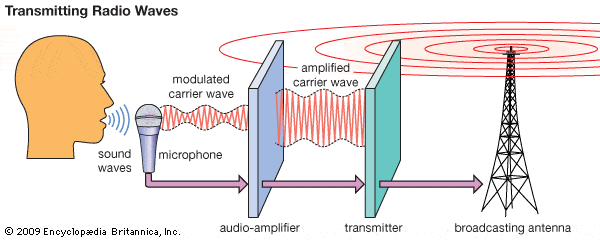
🔹 What are Radio Waves?
Radio waves are a type of electromagnetic waves used to transmit data over short to long distances.
📌 They can:
Travel in all directions
Pass through walls and buildings
🧠 Uses of Radio Waves
AM/FM Radio 📻
Wi-Fi 📶
Bluetooth 🔵
Mobile communication 📱
⭐ Advantages
Can cover large areas
No line-of-sight required
Easy to install
❌ Disadvantages
Interference from other devices
Security issues
Lower speed than fiber
📡 Microwaves
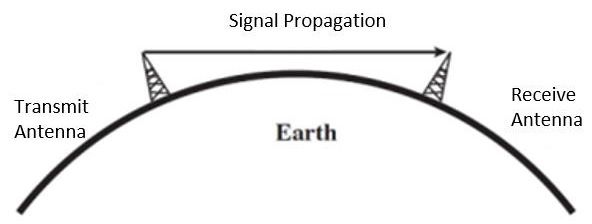
🔹 What are Microwaves?
Microwaves are high-frequency radio waves used for long-distance communication.
📌 They require line-of-sight communication
(Sender and receiver must face each other)
🧠 Examples
Mobile towers 📶
Point-to-point communication
Long-distance telephone calls
⭐ Advantages
High data transmission rate
Suitable for long distances
No cable required
❌ Disadvantages
Affected by weather (rain, fog)
Obstacles block signals
Expensive setup
🔦 Infrared Waves
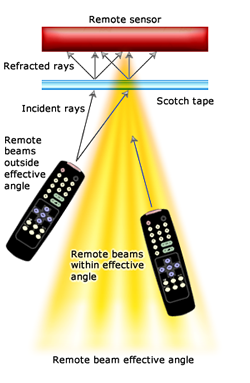
🔹 What are Infrared Waves?
Infrared waves are used for short-range communication.
📌 They:
Cannot pass through walls
Work only in the same room
🧠 Examples
TV remote control 📺
Wireless mouse & keyboard
Short-range device communication
⭐ Advantages
Low cost
Secure (cannot penetrate walls)
Simple technology
❌ Disadvantages
Very short range
Line-of-sight required
Not suitable for networks
🛰️ Satellite Communication
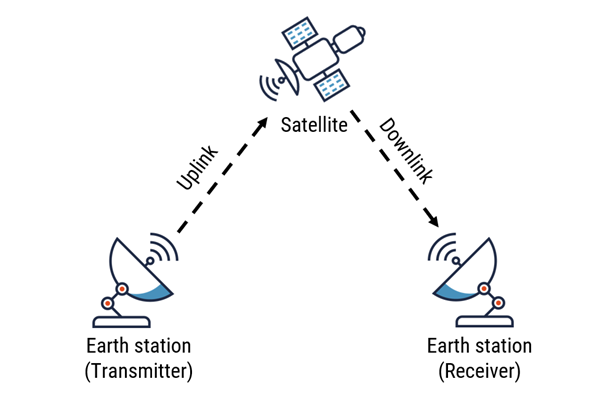
🔹 What is Satellite Communication?
Satellite communication uses satellites in space to transmit signals over very large distances.
📌 Signals travel:
Earth → Satellite (Uplink)
Satellite → Earth (Downlink)
🧠 Examples
DTH television 📺
GPS 🧭
International calls
Weather monitoring
⭐ Advantages
Covers huge geographical areas 🌍
Suitable for remote locations
Reliable for broadcasting
❌ Disadvantages
Very expensive
Signal delay (latency)
Weather interference
📊 Comparison Table (Exam Friendly)
Wireless Media | Range | Speed | Example |
|---|---|---|---|
Radio Waves | Short–Medium | Medium | Wi-Fi |
Microwaves | Medium–Long | High | Mobile towers |
Infrared | Very Short | Low | Remote control |
Satellite | Very Large | Medium | GPS, DTH |
🔐 Security Concerns in Wireless Media
Because signals travel through air:
Hackers can intercept data 🕵️
Encryption is necessary
Authentication is important
📌 This is why Wi-Fi passwords exist.
✍️ Definition
📌 Unguided transmission media transmit data through free space using electromagnetic waves without physical cables.
⭐ One-Line Summary
🔹 Wireless media allows data transmission through air using electromagnetic signals, enabling mobility and wide-area communication.