🤔 What are Network Devices?
Network Devices are hardware components that help computers and other devices:
🔗 Connect with each other
🔁 Transfer data
🚦 Control traffic
🌍 Access the Internet
📌 In simple words:
Network devices act like traffic police and roads of a computer network.
Without network devices, computers cannot communicate properly, even if cables or Wi-Fi exist.
🧠 Why Network Devices Are Needed
Network devices help to:
Connect multiple computers together
Reduce data collision
Improve speed & performance
Provide Internet access
Secure the network
Manage large networks efficiently
🧩 Commonly Used Network Devices
We will study the following important network devices in detail:
1️⃣ Hub
2️⃣ Switch
3️⃣ Router
4️⃣ Modem
5️⃣ Repeater
6️⃣ Bridge
7️⃣ Gateway
8️⃣ Firewall
🔁 Hub
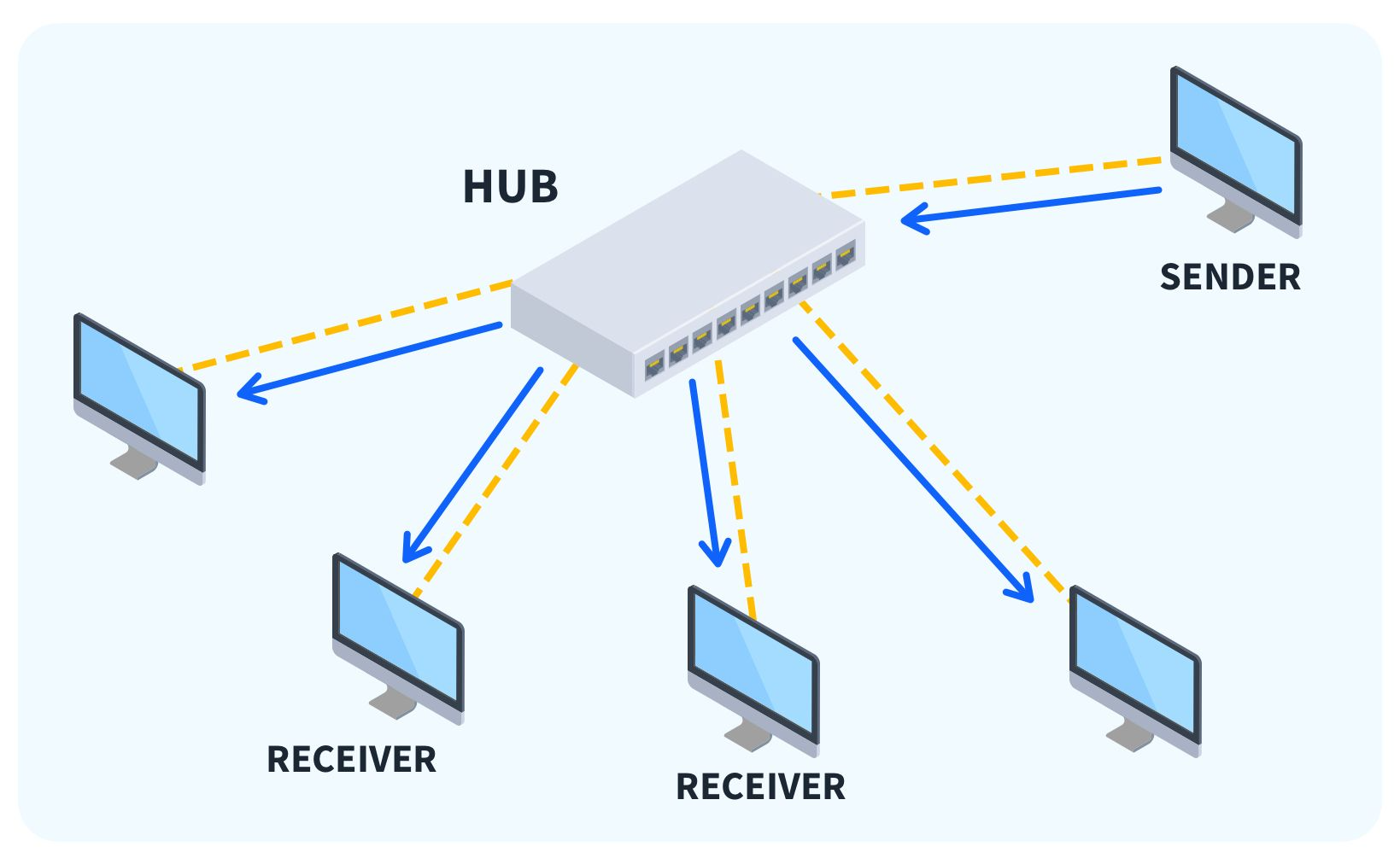
🔹 What is a Hub?
A Hub is a basic network device used to connect multiple computers in a network.
📌 It works like a central connection point.
🧠 How Hub Works (Very Simple)
One computer sends data
Hub broadcasts that data to all connected devices
All computers receive it
Only the intended computer accepts it
📌 Hub is not intelligent.
⭐ Characteristics of Hub
Works at Physical Layer
No filtering
No security
Shared bandwidth
✅ Advantages
Cheap
Easy to install
Simple design
❌ Disadvantages
Slow performance
Data collision occurs
Not used in modern networks
📌 Hub is now mostly obsolete
🔀 Switch
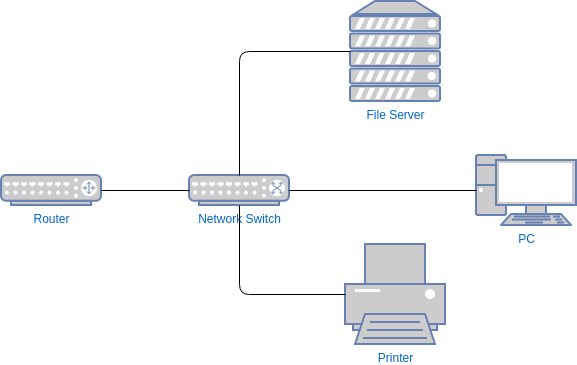
🔹 What is a Switch?
A Switch is an intelligent network device used to connect multiple devices in a LAN.
📌 It sends data only to the intended device, not everyone.
🧠 How Switch Works
Switch checks MAC address
Identifies destination device
Sends data only to that device
📌 This reduces traffic and collision.
⭐ Characteristics of Switch
Works at Data Link Layer
Faster than hub
Secure
Efficient
✅ Advantages
High speed ⚡
No collision
Better performance
Widely used
❌ Disadvantages
Costlier than hub
Limited to LAN
📌 Most modern LANs use switches
🌍 Router
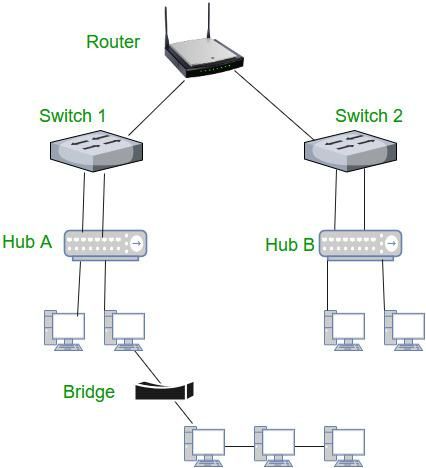
🔹 What is a Router?
A Router is a network device that connects different networks.
📌 It connects:
LAN ↔ Internet
LAN ↔ LAN
🧠 How Router Works
Uses IP addresses
Finds best path for data
Routes data packets correctly
📌 Your home Wi-Fi router is the best example.
⭐ Characteristics of Router
Works at Network Layer
Intelligent device
Supports routing protocols
✅ Advantages
Connects to Internet
Reduces traffic
Supports security (NAT, Firewall)
❌ Disadvantages
Expensive
Slower than switch for local traffic
📶 Modem
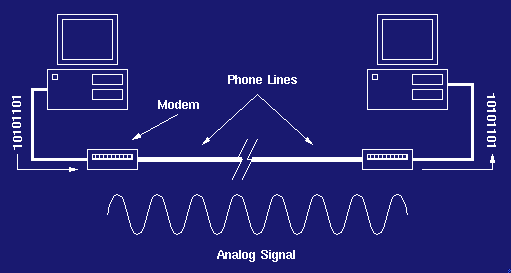
🔹 What is a Modem?
A Modem converts:
Digital signals ↔ Analog signals
📌 Full form:
MOdulator + DEModulator
🧠 Why Modem is Needed?
Internet service providers use analog signals
Computers use digital signals
Modem converts between them
✅ Advantages
Enables Internet access
Essential for broadband
❌ Disadvantages
Cannot manage traffic alone
🔄 Repeater
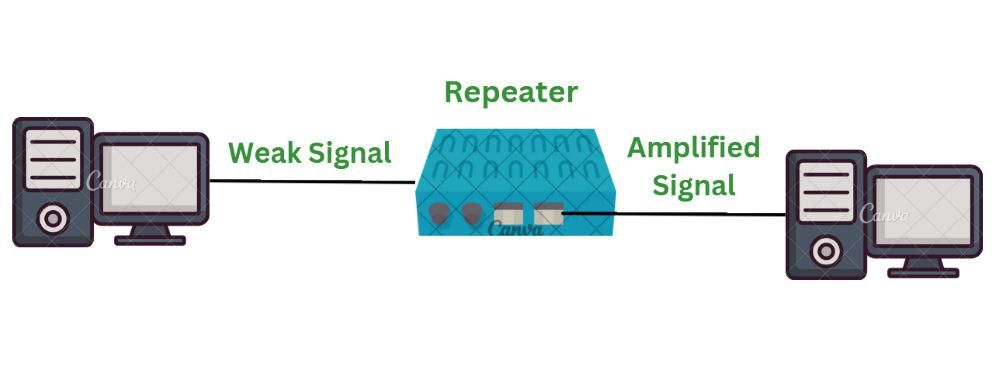
🔹 What is a Repeater?
A Repeater is used to boost weak signals.
📌 It receives weak signal → regenerates → retransmits.
🧠 Example
Wi-Fi extender in large house 🏠
⭐ Characteristics
Works at Physical Layer
No data filtering
🌉 Bridge
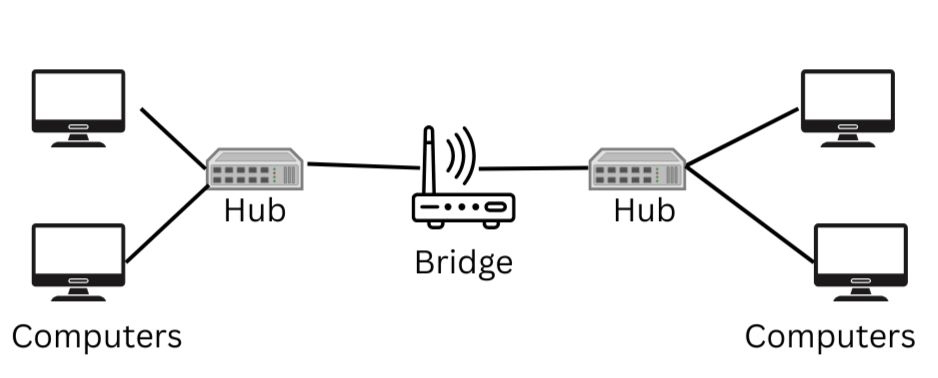
🔹 What is a Bridge?
A Bridge connects two similar LAN segments.
📌 It filters traffic based on MAC address.
🧠 Use Case
Dividing a large LAN into smaller parts
🚪Gateway
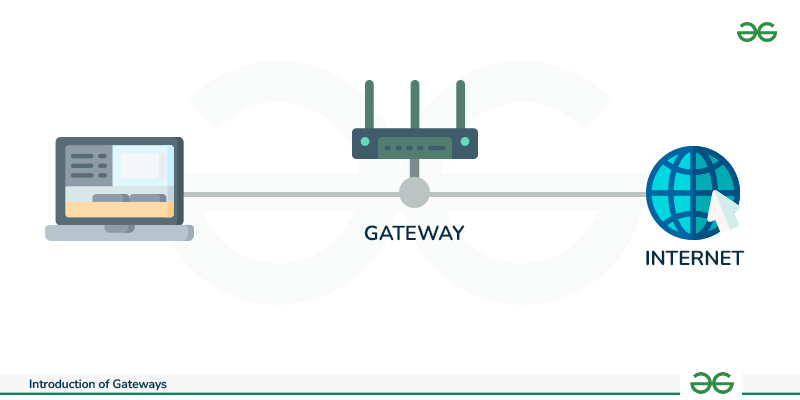
🔹 What is a Gateway?
A Gateway connects networks with different protocols.
📌 It acts as a translator.
🧠 Example
Connecting a TCP/IP network with a legacy system
🛡️ Firewall
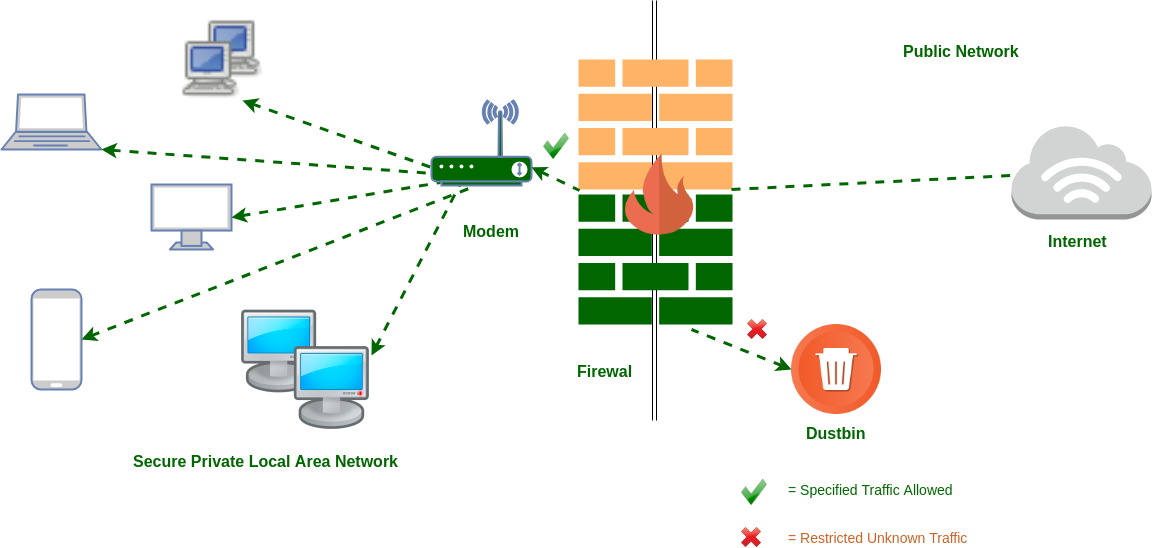
🔹 What is a Firewall?
A Firewall is a security device that:
Monitors traffic
Blocks unauthorized access
📌 Works like a security guard 🚨.
✅ Advantages
Protects from hackers
Controls network access
Improves security
📊 Quick Comparison Table (Exam Friendly)
Device | Layer | Purpose |
|---|---|---|
Hub | Physical | Broadcast data |
Switch | Data Link | Forward data |
Router | Network | Route packets |
Modem | Physical | Signal conversion |
Repeater | Physical | Boost signals |
Bridge | Data Link | Segment LAN |
Gateway | Multiple | Protocol translation |
Firewall | Multiple | Network security |
⭐ One-Line Summary
🔹 Network devices are hardware components that connect, control, route, and secure data communication in a computer network.