🤔 What are Transmission Modes?
In a computer network, data does not just move randomly.
There are specific ways (modes) in which data can be sent and received between devices.
📌 Transmission Mode defines:
The direction of data flow between two connected devices
🧠 Why Are Transmission Modes Important?
Transmission modes decide:
📤 Who can send data
📥 Who can receive data
🔁 Whether communication is one-way or two-way
⚡ Efficiency of communication
🧭 Types of Transmission Modes
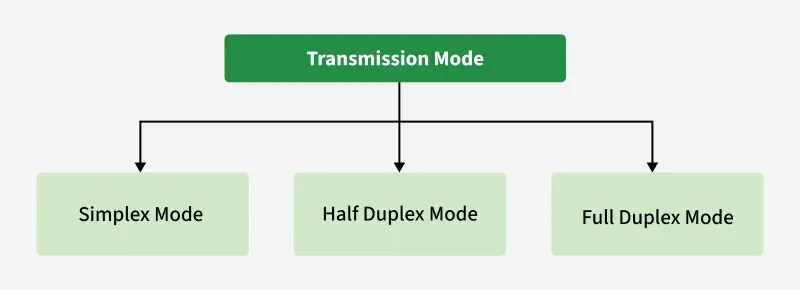
There are three main transmission modes:
1️⃣ Simplex Mode
2️⃣ Half Duplex Mode
3️⃣ Full Duplex Mode
We’ll understand each one clearly 👇
➡️ Simplex Transmission Mode
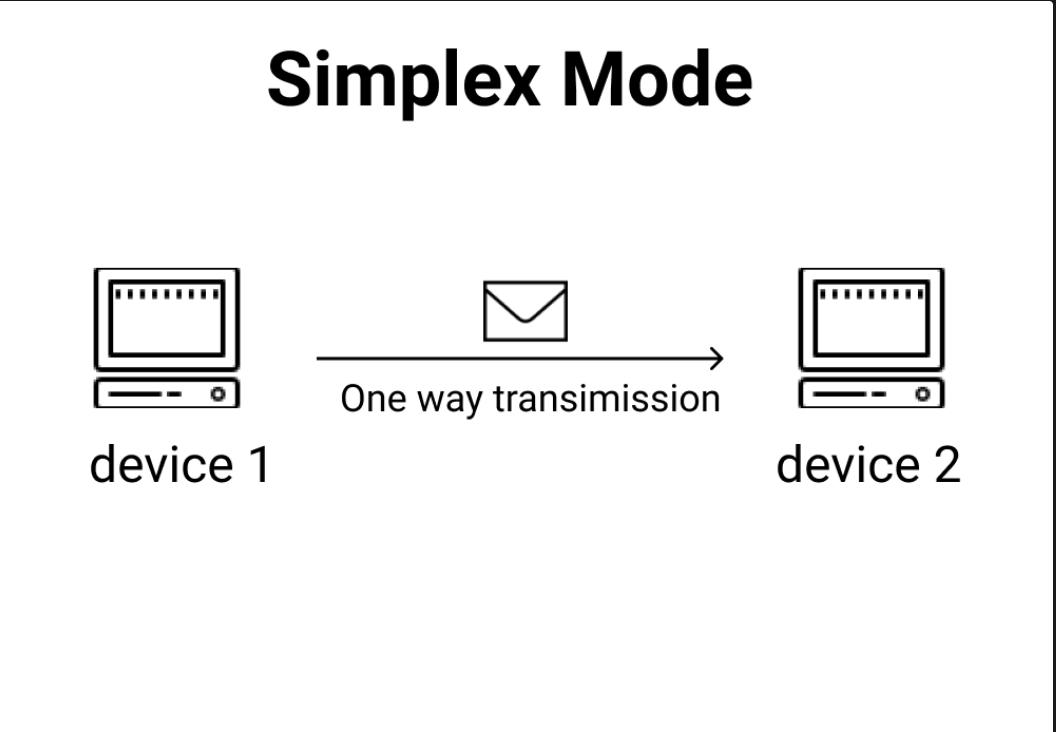
🔹 What is Simplex Mode?
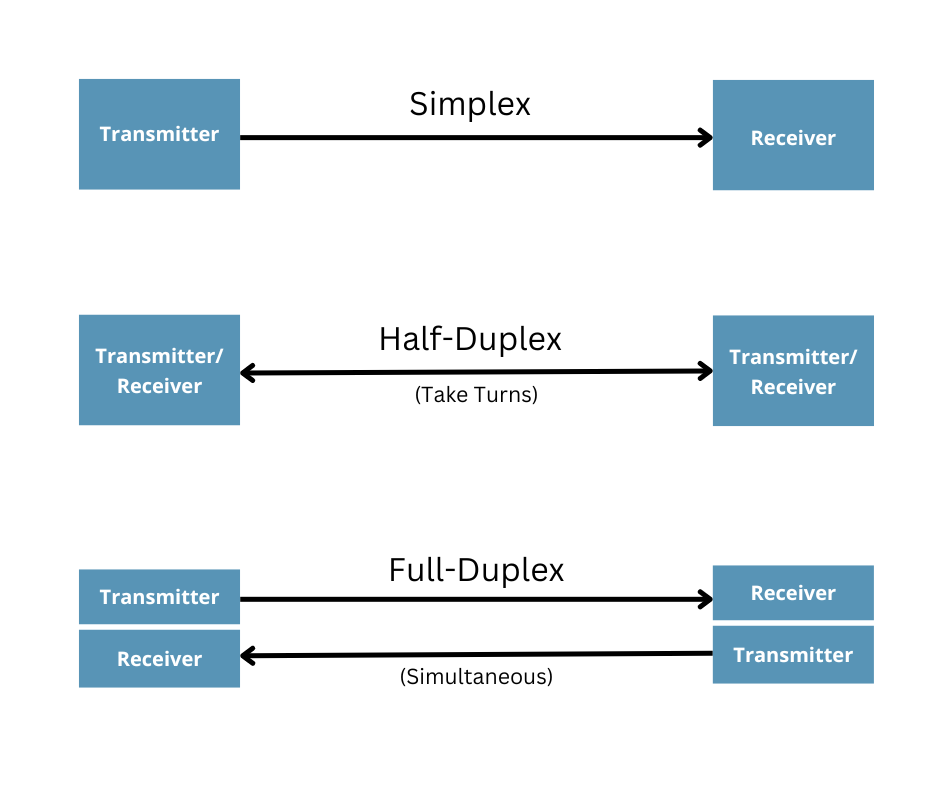
In Simplex Mode, data flows in only one direction.
📌 One device is always the sender
📌 The other device is always the receiver
👉 There is no reverse communication.
🧠 Simple Real-Life Example
📺 Television
TV station sends signals
You only receive them
You cannot send data back to the TV station
💻 Computer Network Examples:
Keyboard → Computer
Mouse → Computer
Monitor (display only)
⭐ Advantages
Simple design
Easy to implement
Low cost
❌ Disadvantages
No feedback
Not suitable for interactive communication
🔁 Half Duplex Transmission Mode
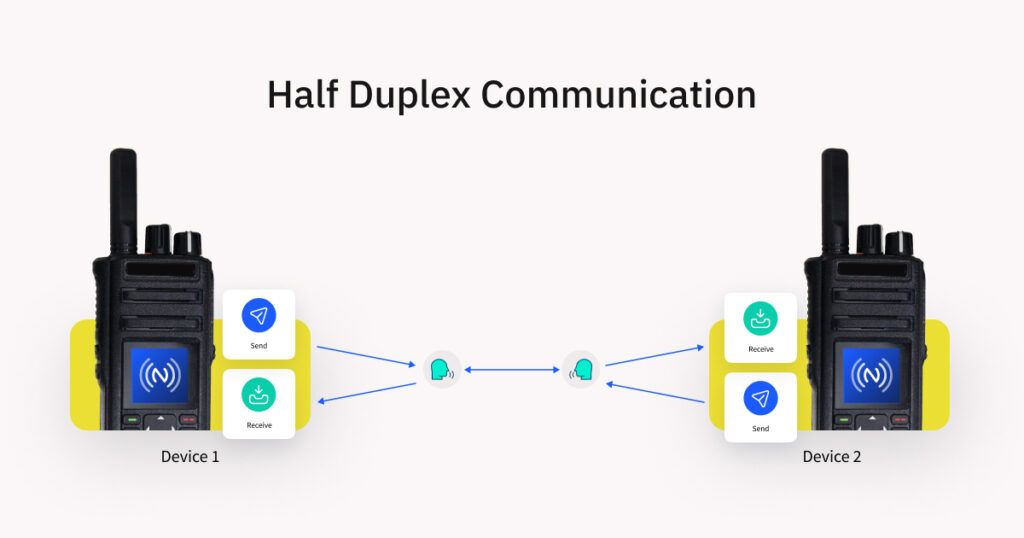
🔹 What is Half Duplex Mode?
In Half Duplex Mode, data flows in both directions, but not at the same time.
📌 Devices take turns to send and receive data.
🧠 Simple Real-Life Example
📻 Walkie-Talkie
One person talks
Other person listens
Both cannot talk at the same time
💻 Computer Network Examples:
Walkie-talkies
Old Ethernet hubs
CB radios
⭐ Advantages
Better than simplex
Two-way communication possible
❌ Disadvantages
Delay due to turn-taking
Less efficient than full duplex
🔄 Full Duplex Transmission Mode
🔹 What is Full Duplex Mode?
In Full Duplex Mode, data flows in both directions at the same time.
📌 Devices can send and receive simultaneously.
🧠 Simple Real-Life Example
📞 Telephone / Mobile Call
Both people can talk and listen at the same time
💻 Computer Network Examples:
Mobile phones
Video calls
Modern Ethernet using switches
⭐ Advantages
Fast communication ⚡
No waiting
Highly efficient
❌ Disadvantages
More complex
Slightly expensive
📊 Comparison Table (Very Important for Exams)
Mode | Direction | Simultaneous Communication | Example |
|---|---|---|---|
Simplex | One-way | ❌ No | Keyboard |
Half Duplex | Two-way | ❌ No | Walkie-talkie |
Full Duplex | Two-way | ✅ Yes | Phone call |
🧠 How Transmission Modes Affect Network Performance
🟢 Simplex → Low interaction
🟡 Half Duplex → Medium interaction
🔵 Full Duplex → High-speed interaction
📌 Modern networks mostly use Full Duplex Mode.
✍️ Definitions
📌 Simplex Mode:
Data transmission occurs in only one direction.
📌 Half Duplex Mode:
Data transmission occurs in both directions, but not simultaneously.
📌 Full Duplex Mode:
Data transmission occurs in both directions at the same time.
⭐ One-Line Summary
🔹 Transmission modes define the direction and nature of data flow between network devices.