🤔 What is NFV? (Basic Idea)
Traditionally, network services like:
Firewall 🔥
Router 🧭
Load balancer ⚖️
were provided using dedicated physical hardware.
📌 NFV replaces these physical network devices with software running on virtual machines or containers.
👉 Network functions become software-based instead of hardware-based.
🧠 Simple Definition
📌 Network Function Virtualization (NFV) is a technology that virtualizes network services so they can run as software on standard servers instead of dedicated hardware.
🧠 One-Line Understanding
NFV = Turning network hardware into software.
🧠 Real-Life Analogy
📺 DVD Player vs Streaming App
DVD player 📀 → Dedicated hardware
Netflix app 📱 → Software on any device
👉 NFV does the same:
Old routers/firewalls = DVD players
Virtual routers/firewalls = apps
🚫 Problems with Traditional Network Hardware
Before NFV ❌:
Expensive hardware 💰
Vendor lock-in 🔒
Slow deployment ⏳
Difficult scaling 📉
High maintenance cost
📌 Adding a new network service could take weeks or months.
🌟 Why NFV Was Introduced
NFV solves:
💸 High cost of hardware
🚀 Slow service deployment
⚙️ Lack of flexibility
📦 Poor scalability
📌 Especially important for ISPs, cloud providers, and telecom networks.
🧱 Core Idea of NFV
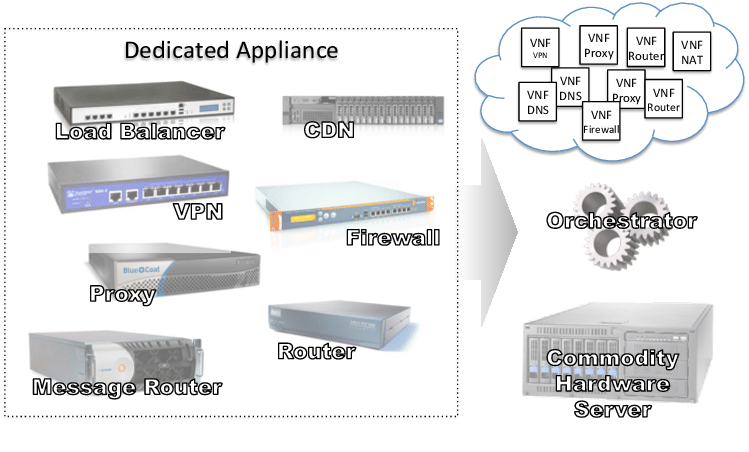
📌 Network functions run as software on virtual machines instead of physical devices.
Examples of Virtual Network Functions (VNFs):
Virtual firewall
Virtual router
Virtual load balancer
Virtual IDS/IPS
🧩 What Are VNFs?
📌 VNF (Virtual Network Function) is a software implementation of a network function.
Examples:
vFirewall 🔥
vRouter 🧭
vNAT 🔁
👉 These VNFs run on:
Virtual Machines
Containers
🏗️ NFV Architecture
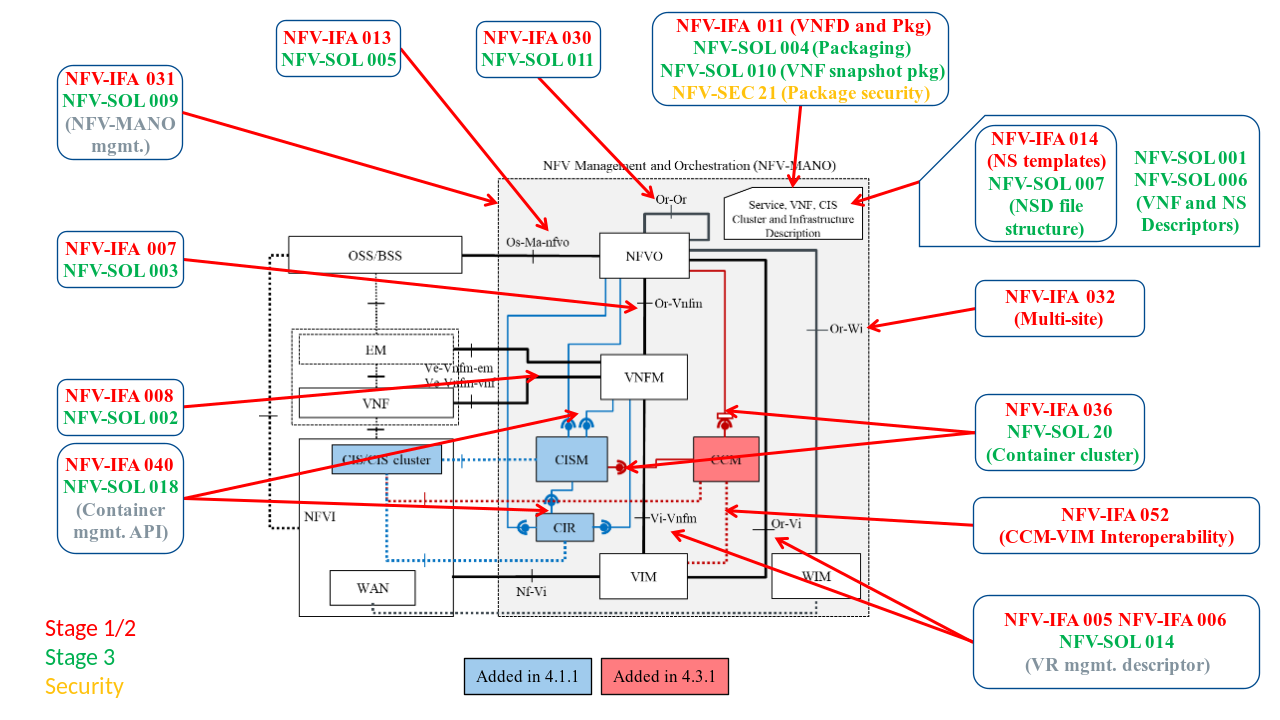
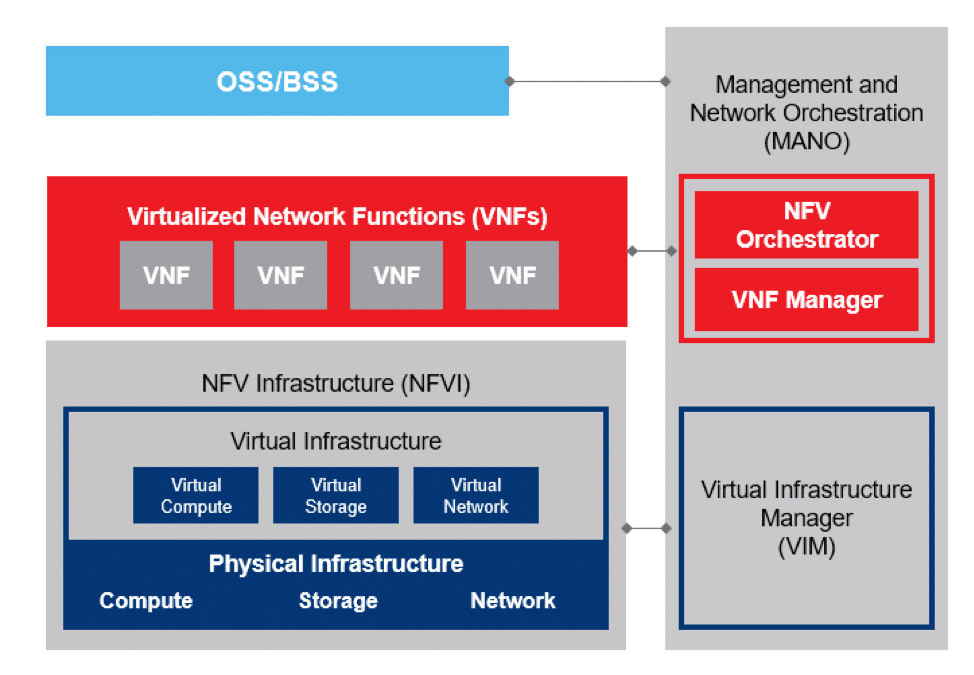
NFV architecture has three main components:
1️⃣ VNFs
2️⃣ NFV Infrastructure (NFVI)
3️⃣ MANO (Management & Orchestration)
🧩 VNFs (Virtual Network Functions)
Software versions of network devices
Perform tasks like routing, firewalling, load balancing
📌 Can be chained together to form services.
🖥️ NFV Infrastructure (NFVI)
Includes:
Physical servers
Storage
Networking hardware
Virtualization layer (Hypervisor)
📌 Provides the platform on which VNFs run.
🧠 MANO (Management and Orchestration)
📌 MANO manages the entire NFV lifecycle.
Responsibilities:
Deploy VNFs
Scale VNFs
Monitor performance
Heal failures
📌 MANO is the brain of NFV.
🔄 How NFV Works (Step-by-Step)
1️⃣ User requests a network service
2️⃣ MANO selects required VNFs
3️⃣ VNFs deployed on virtual machines
4️⃣ Traffic routed through VNFs
5️⃣ Service delivered
📌 All done automatically.
🔗 Service Function Chaining (SFC)
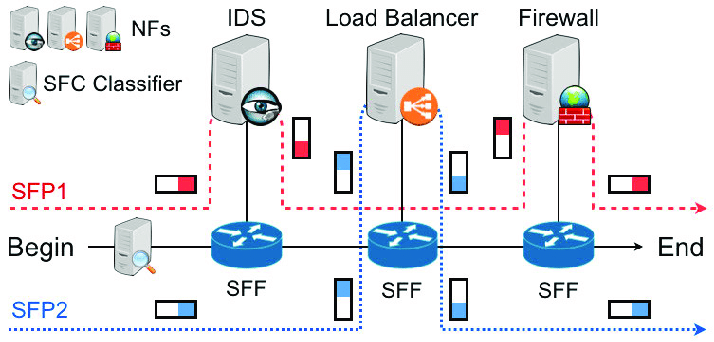
📌 SFC defines the order in which traffic passes through VNFs.
Example:
Firewall → IDS →Load Balancer →Server👉 Very flexible compared to hardware chaining.
⚖️ NFV vs Traditional Networking
Feature | Traditional | NFV |
|---|---|---|
Network functions | Hardware | Software |
Deployment | Slow | Fast |
Cost | High | Low |
Scalability | Limited | High |
Vendor lock-in | Yes | No |
⚖️ NFV vs SDN
Feature | NFV | SDN |
|---|---|---|
Focus | What runs | How traffic flows |
Replaces | Hardware appliances | Control logic |
Key concept | VNFs | Controller |
Relationship | Complements SDN | Complements NFV |
📌 NFV + SDN = Modern programmable networks ⭐
🌍 Where is NFV Used? (Real World)
NFV is used in:
Cloud data centers ☁️
ISPs 🌐
5G networks 📶
Enterprise WANs 🏢
📌 Especially useful for telecom operators.
🧠 Advantages of NFV
🚀 Faster service deployment
💰 Reduced cost
🔄 Easy scaling
⚙️ Automation-friendly
Hardware independence
❌ Challenges of NFV
Performance overhead
Complex orchestration
Security of VNFs
Requires skilled management
📌 Needs careful design.
🛡️ NFV and Security (Quick Insight)
NFV improves security by:
Dynamic deployment of firewalls
Rapid isolation of threats
📌 But VNFs must be hardened 🔐
🧠 Memory Tricks
NFV = Network Functions Virtualized ☁️
VNF = Virtual appliance
MANO = Manager 🧠
NFV replaces boxes 📦
⭐ One-Line Summary
🔹 Network Function Virtualization (NFV) replaces hardware-based network devices with software-based virtual network functions running on standard servers.