🧠 Core Idea
Containers can't run on their own — they need a platform to launch and manage them. AWS gives you three services for that:
Amazon ECS — runs containers on EC2 instances you manage
AWS Fargate — runs containers with no servers to manage
Amazon ECR — stores the Docker images ECS/Fargate deploy
Knowing how these three fit together is a key exam concept.
📦 Amazon ECS (Elastic Container Service)
ECS is AWS's managed container orchestration service — it deploys and runs your Docker containers.
AWS handles the container lifecycle (start, stop, monitor, schedule), but you provide the compute: you launch and maintain the EC2 instances that host the containers.
Think of ECS as deciding:
Which container runs, and where
When it starts or stops
How work spreads across your EC2 instances
It also pairs well with an Application Load Balancer for scalable web apps.
💡How it works:
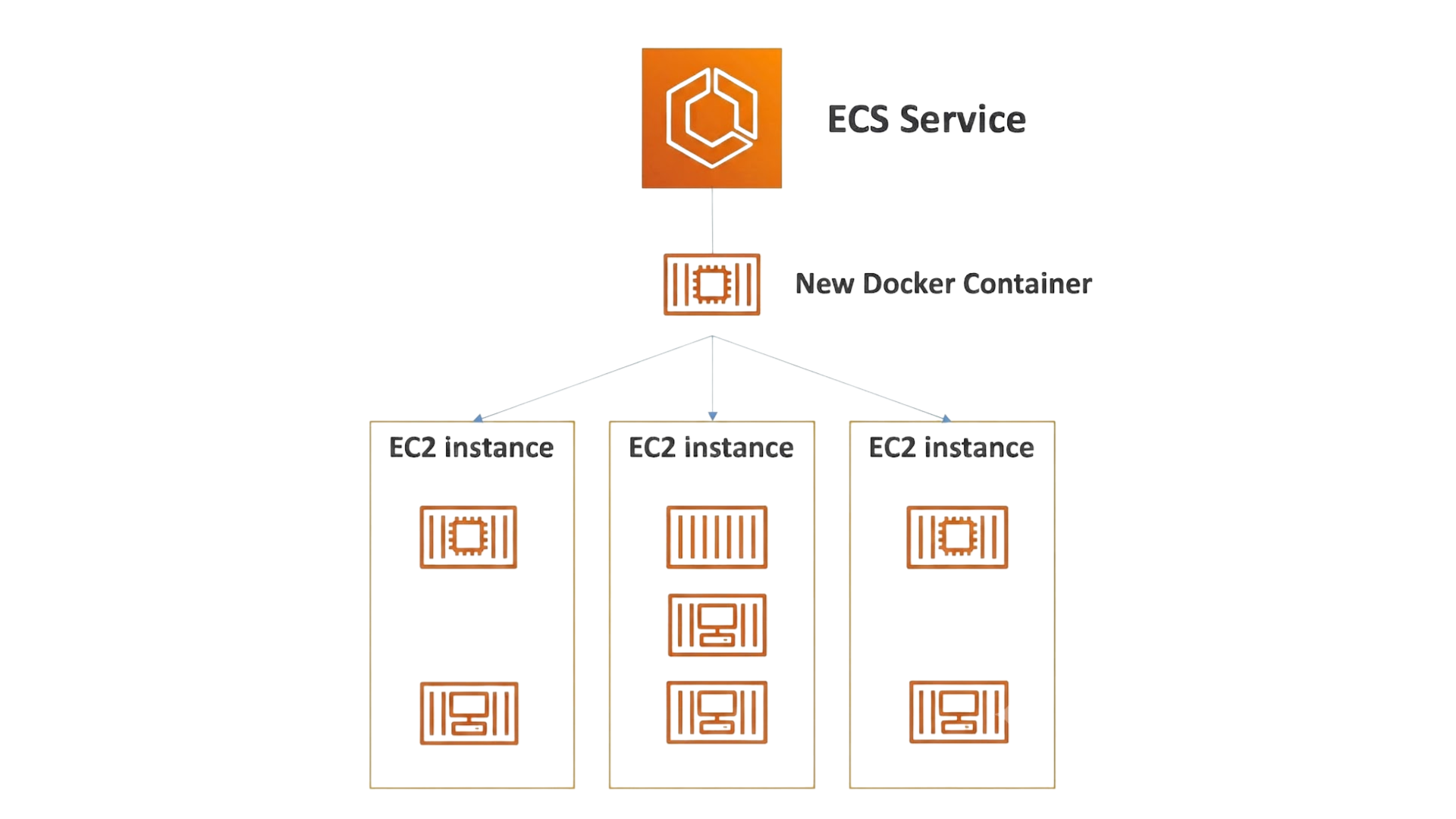
Launch EC2 instances
ECS agent installs automatically (ECS-optimized AMIs)
Register instances with an ECS cluster
Store your Docker image in a registry
Create an ECS task
ECS places the container on an available instance
ECS monitors and manages it
🚀 AWS Fargate
Fargate also runs Docker containers — but you never create or manage EC2 instances. AWS handles the infrastructure behind the scenes.
You just specify:
The Docker image
CPU needs
Memory needs
AWS launches the container automatically. No servers to provision = serverless container service.
💡How it works:
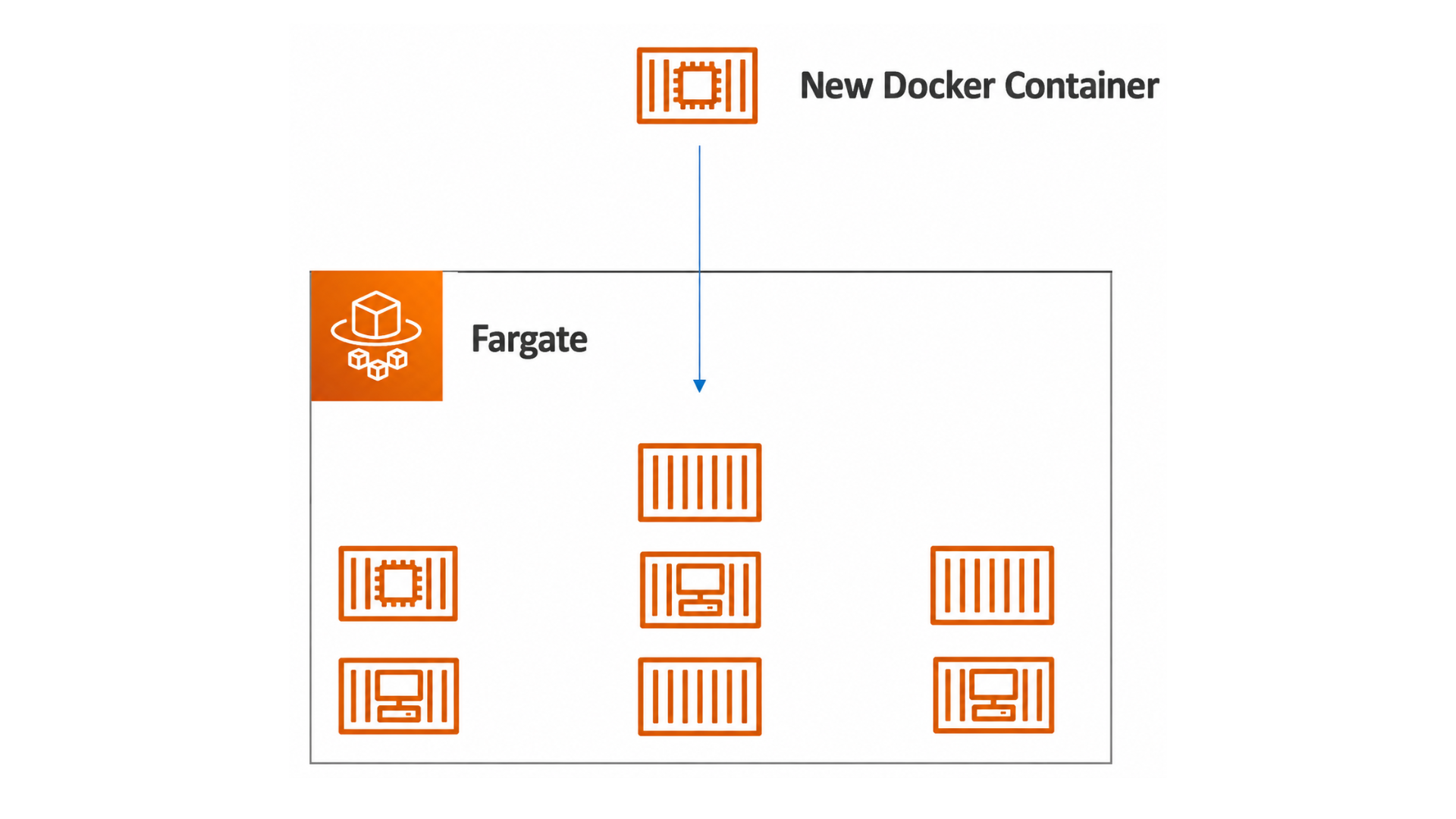
Store your Docker image
Specify CPU/memory
Deploy the container
AWS provisions infrastructure automatically
Container runs — no EC2 management involved
⚖️ ECS vs. Fargate
🔹 | 📦 ECS | 🚀 Fargate |
|---|---|---|
Infrastructure | You manage EC2 | AWS manages it |
Provisioning | Required | None |
Control | High | Simpler, less control |
Best for | Infrastructure-level customization | Serverless simplicity |
Both run Docker containers on AWS — the real difference is who manages the servers.
🗂️ Amazon ECR (Elastic Container Registry)
Before ECS or Fargate can run a container, they need an image to pull from. Amazon ECR is AWS's private Docker image repository — a secure place to store images before deployment.
💡How it works:
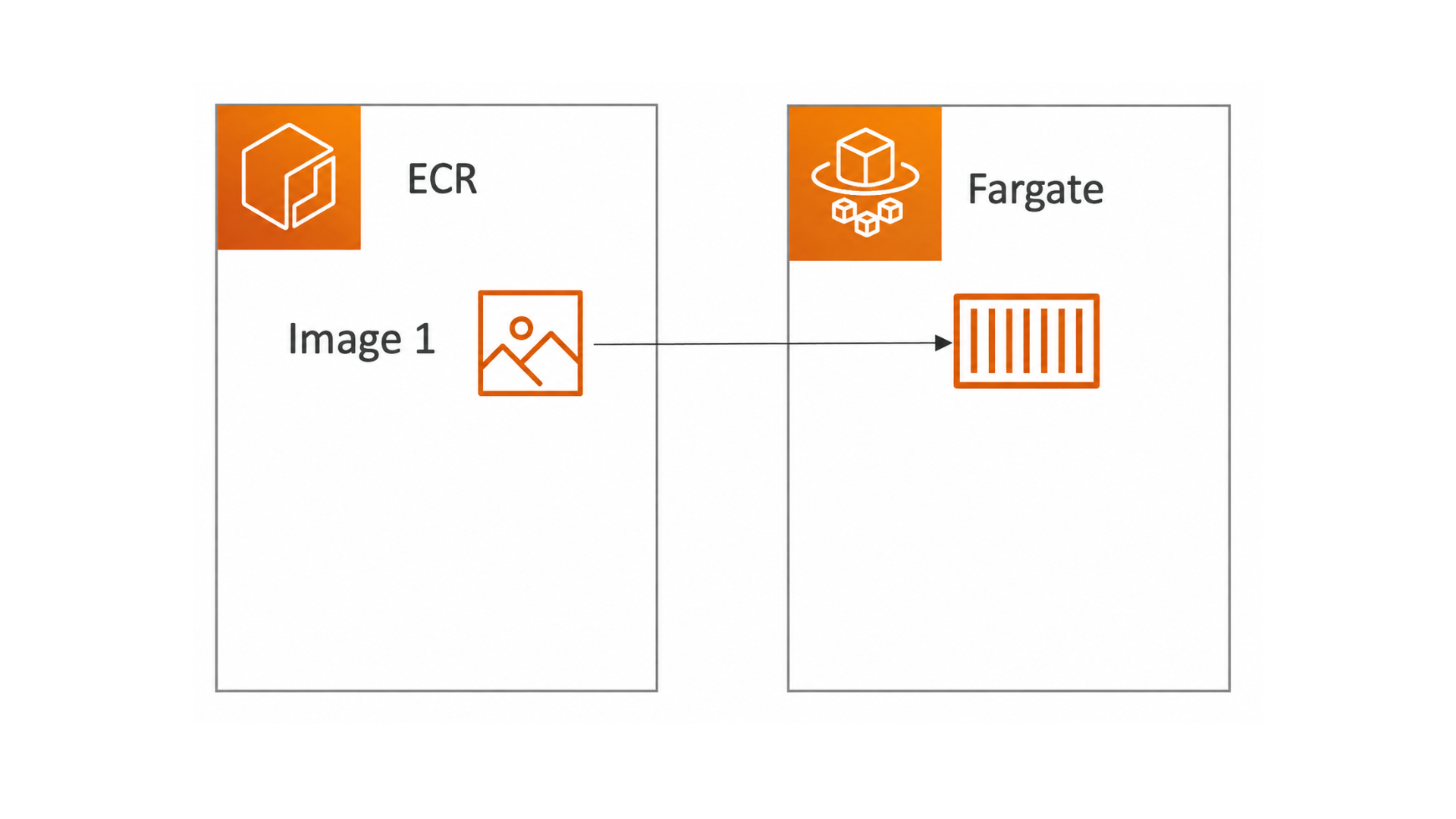
Build a Docker image
Push it to ECR
ECS or Fargate pulls the image from ECR
AWS runs a container from it
🔗 How They Work Together
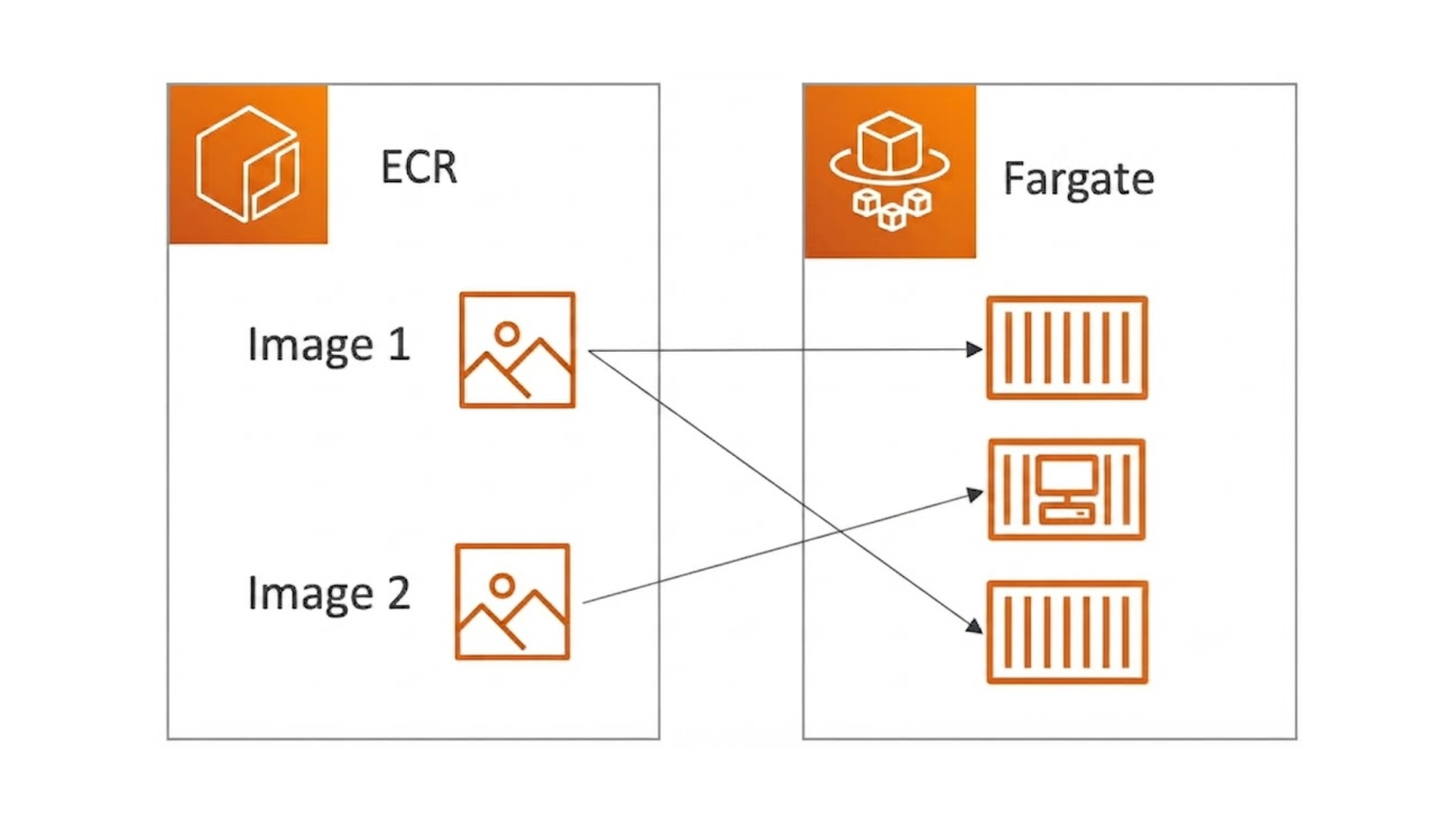
ECR stores your Docker images
ECS or Fargate retrieves those images
The image becomes a running container
Your app goes live
Docker Image → Amazon ECR → Amazon ECS or AWS Fargate → Running Container
🎓 Exam Tips
ECS = containers on EC2 you manage
Fargate = containers, serverless
ECR = private Docker image storage
Both ECS and Fargate can deploy images stored in ECR
"Where are Docker images stored on AWS?" → ECR
"Serverless way to run containers?" → Fargate
🧠 Key Takeaways
Service | You Manage | Serverless? | Use Case |
|---|---|---|---|
ECS | EC2 instances | No | Run containers on your own EC2s |
Fargate | Nothing | Yes | Run containers serverlessly |
ECR | Docker images | N/A | Store & manage Docker images |