🧠 Core Idea
As apps grow into many Docker containers, managing them by hand gets hard fast.
Kubernetes is an open-source platform that automates deploying, managing, scaling, and operating containerized apps.
Rather than run Kubernetes yourself, AWS offers Amazon EKS — a managed service that takes the complexity out of running Kubernetes clusters.
☸️ What is Kubernetes?
Kubernetes (K8s) is an open-source container orchestration platform. It automates starting, stopping, scaling, and monitoring containers instead of you doing it manually.
It's most commonly used with Docker, though it can manage other container technologies too.
👀 What it does:
Deploys containerized apps
Auto-scales up or down
Manages large fleets of containers
Monitors container health
Restarts failed containers
Spreads workloads across servers
☁️ What is Amazon EKS?
Amazon Elastic Kubernetes Service (EKS) is AWS's managed Kubernetes service.
AWS runs the Kubernetes control plane for you, so you can focus on deploying and managing your apps instead of maintaining the platform.
⚙️ Running Containers with EKS
An EKS cluster runs your apps on worker nodes, which can be:
Amazon EC2 instances, or
AWS Fargate (serverless)
Deployment flow:
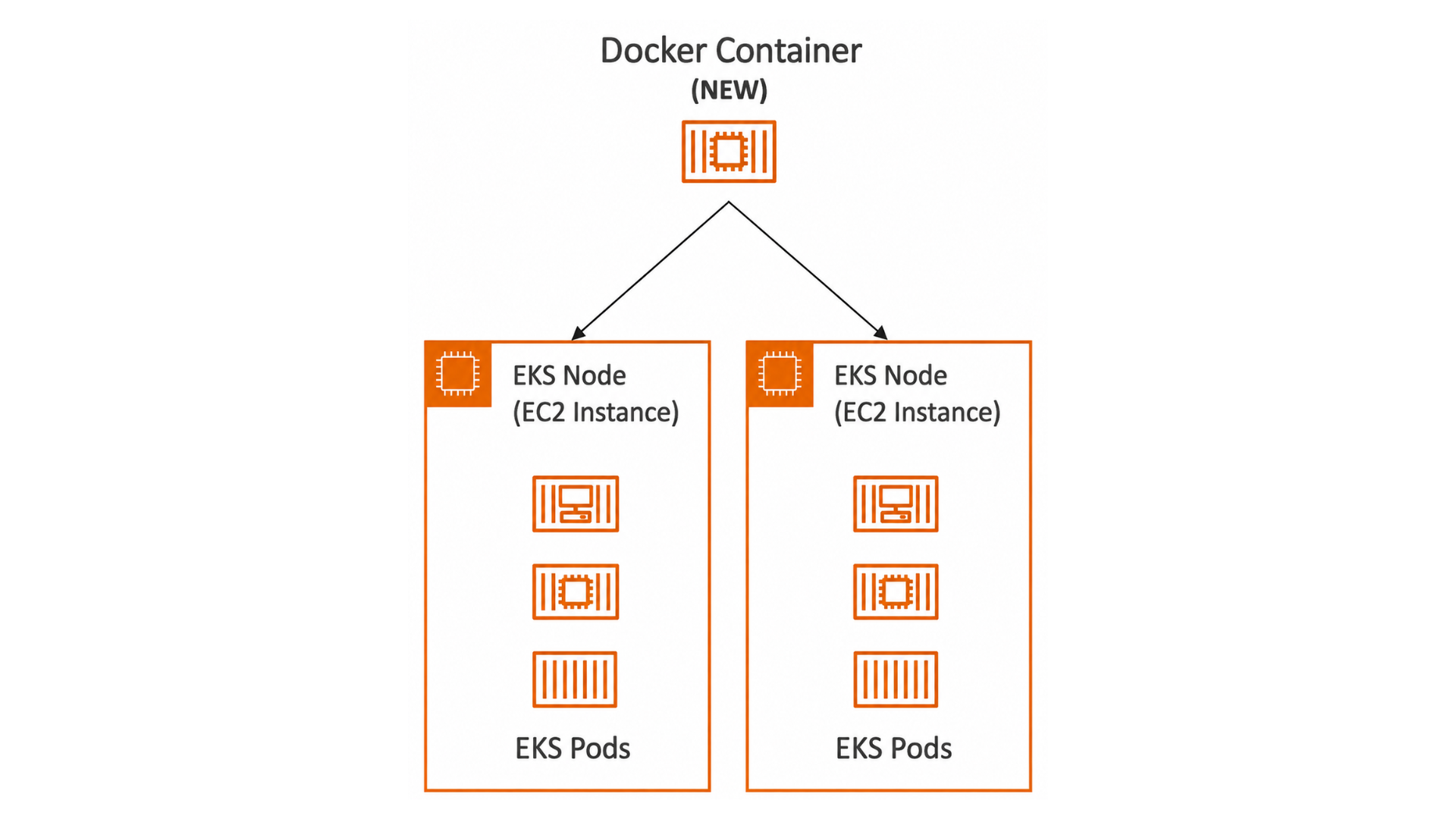
App is packaged into Docker containers
Kubernetes creates Pods — the smallest deployable unit
EKS schedules Pods onto available worker nodes
Containers start running
Scheduling is automatic.
📦 What's a Pod?
A Pod is the smallest deployable unit in Kubernetes — one or more containers working together as a single component.
EKS creates Pods and places them onto worker nodes automatically, spreading apps efficiently across the cluster.
🖥️ EC2 vs. Fargate for EKS
Amazon EC2
You provision and manage the instances
Pods run on those instances
More control over infrastructure
AWS Fargate
AWS manages the infrastructure
No EC2 instances to provision
Pods run on serverless compute
Both support Kubernetes workloads — pick based on how much control you need.
🌍 Why Kubernetes?
Its biggest strength: cloud agnostic. It's not tied to one provider — the same Kubernetes app can run on:
AWS
Azure
Google Cloud
On-premises
Hybrid setups
Same tools and processes, regardless of where it's hosted.
⭐ Why Amazon EKS?
Kubernetes is powerful but complex to run yourself. EKS simplifies that:
Simplified deployment
Less operational overhead
Integrates with AWS services
Flexible: EC2 or Fargate
Easier to manage in production
You get Kubernetes' power without managing the whole platform.
⚖️ ECS vs. EKS
🔹 | 📦 ECS | ☸️ EKS |
|---|---|---|
Platform | AWS-native orchestration | Managed open-source Kubernetes |
Scope | AWS-only | Multi-cloud / hybrid |
Complexity | Simpler | More powerful, more complex |
Concepts | Tasks, Services | Pods, Clusters |
Both run containers — EKS is the pick when Kubernetes compatibility matters.
🎓 Exam Tips
EKS = Amazon Elastic Kubernetes Service, AWS's managed Kubernetes
Kubernetes deploys, manages, and scales containerized apps — usually Docker
EKS runs on EC2 or Fargate
Kubernetes is cloud agnostic
Exam mentions "Kubernetes" → answer is Amazon EKS
🧠 Key Takeaways
EKS is AWS's managed Kubernetes service
Kubernetes automates deployment, management, and scaling of containers
Apps on EKS run inside Pods, hosted on EC2 or Fargate
Kubernetes is cloud agnostic — runs on AWS, Azure, GCP, on-prem
EKS removes the operational burden of running Kubernetes yourself
Remember: Docker Containers → ECS / Fargate · Kubernetes → Amazon EKS