DevOps (a portmanteau of Development and Opserations) is a cultural and professional movement that emphasizes communication, collaboration, and automation between software developers and IT professionals.
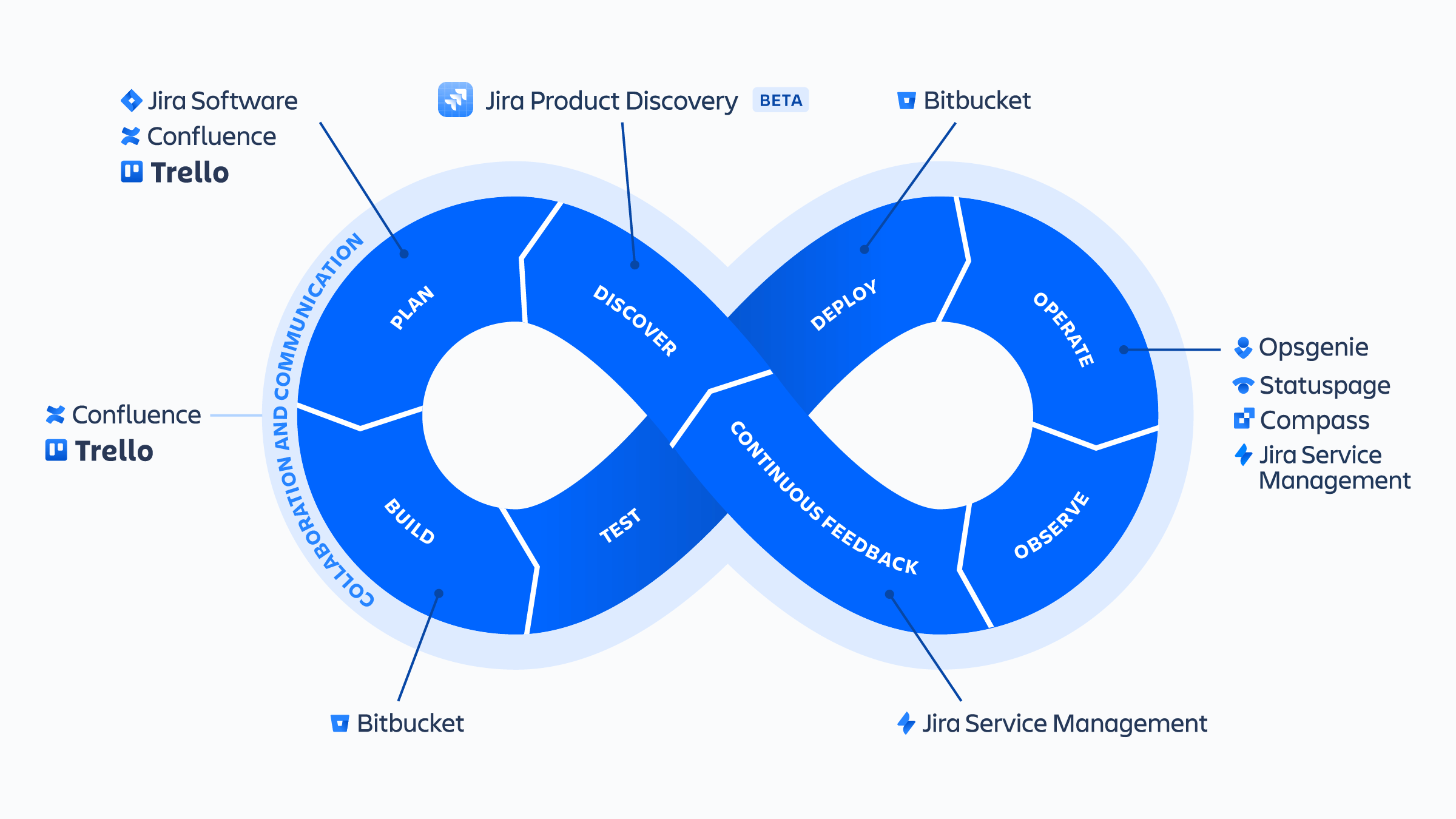
🧩 The Goal of DevOps
Traditionally, Developers wanted to change things (push new code), while Operations wanted to keep things stable (not touch anything). This created friction. DevOps aims to align these goals so that we can deliver high-quality software frequently and reliably.
💡 The DevOps Mantra: "You build it, you run it."
♾️ The DevOps Infinity Loop
DevOps is best visualized as an infinity symbol, representing a continuous, never-ending cycle of improvement.
Plan: Define the business value and requirements.
Code: Development and code review.
Build: Create the executable (compilation, Docker images).
Test: Automated testing to ensure quality.
Release: Manage the update and versioning.
Deploy: Pushing the code to the server (Production).
Operate: Manage the infrastructure and scaling.
Monitor: Collecting data on performance and errors to start the loop again.
🛠️ The Three Pillars of DevOps
1. CI/CD (The Engine) 🚂
Continuous Integration (CI): Developers merge their code changes back to a central branch as often as possible. Automated builds and tests are run to catch "integration bugs" early.
Continuous Delivery/Deployment (CD): The practice of automatically deploying every code change that passes the test suite to a production-like environment (or directly to customers).
2. Infrastructure as Code (IaC) 💻
Instead of manually setting up servers, DevOps engineers write scripts (code) to manage hardware. This makes the environment consistent and easy to replicate.
3. Automation & Monitoring 📈
Everything that can be automated, should be automated. High-performing teams use monitoring tools to catch bugs in production before users even notice them.
✅ Benefits of DevOps
Speed: Release new features daily instead of every 6 months.
Reliability: Automated testing and monitoring reduce the "blast radius" of errors.
Scalability: Use of Cloud and Containers (like Docker/Kubernetes) allows the app to handle millions of users effortlessly.
Faster "Time to Market": Businesses can react to competitors in hours, not weeks.
📊 Agile vs. DevOps: What's the difference?
Feature | Agile | DevOps |
|---|---|---|
Focus | Bridging the gap between User and Developer. | Bridging the gap between Development and Operations. |
Goal | Managing Change. | Managing Deployment and Reliability. |
Key Metric | Velocity (how much code is written). | Cycle Time (how fast code reaches the user). |
Tools | Jira, Trello, Scrum Boards. | Jenkins, Docker, GitHub Actions, AWS. |