🤔 What is a CDN?
Normally:
A website is hosted on one server
Users far away experience slow loading
📌 A CDN solves this by storing copies of content at multiple locations around the world.
👉 Content is delivered from the nearest server, not the original one.
🧠 Simple Definition
📌 A Content Delivery Network (CDN) is a distributed network of servers that delivers web content to users from the closest server to reduce delay and improve performance.
🧠 One-Line Understanding
CDN = Bring content closer to users.
🧠 Real-Life Analogy
🍕 Pizza Chain Example
One kitchen for whole country ❌
Multiple branches in every city ✅
👉 Customer gets pizza faster 🍕
👉 CDN works the same way for websites 🌐
🌐 Why CDN Is Needed
Without CDN ❌:
High delay ⏱️
Slow loading 🐌
Server overload 🔥
Poor user experience 😡
With CDN ✅:
Faster content delivery ⚡
Reduced latency
Load distributed
Better availability
📌 Essential for modern Internet services.
🧭 Where CDN Is Used?
CDNs are used by:
Video streaming platforms 🎥
E-commerce websites 🛒
Social media 📱
Gaming platforms 🎮
Cloud services ☁️
📌 Almost every big website uses CDN.
🧩 Key Components of CDN
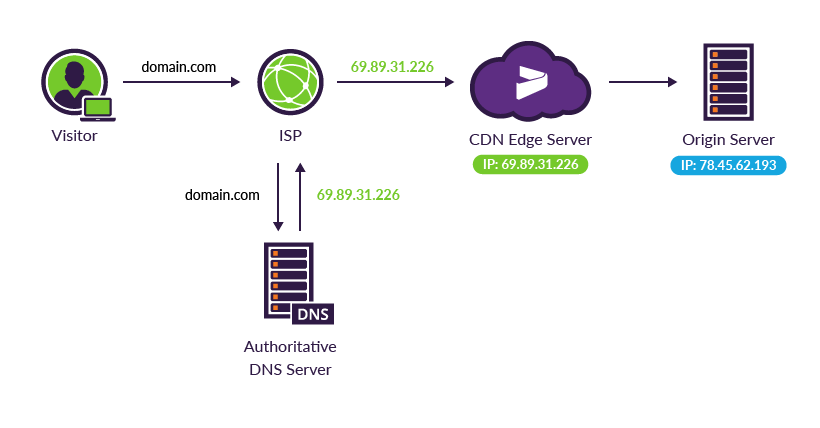
A CDN consists of:
1️⃣ Origin Server
2️⃣ Edge Servers
3️⃣ CDN Network
4️⃣ Users
🖥️ 1. Origin Server
📌 Main server where original content exists.
Examples:
Website server
Cloud storage
🌍 2. Edge Servers (PoPs)
📌 Servers located close to users.
Store cached content
Serve users directly
📌 PoP = Point of Presence
🌐 3. CDN Network
📌 Interconnected edge servers distributed globally.
👤 4. End Users
📌 Request content from nearest edge server.
🔄 How CDN Works (Step-by-Step)
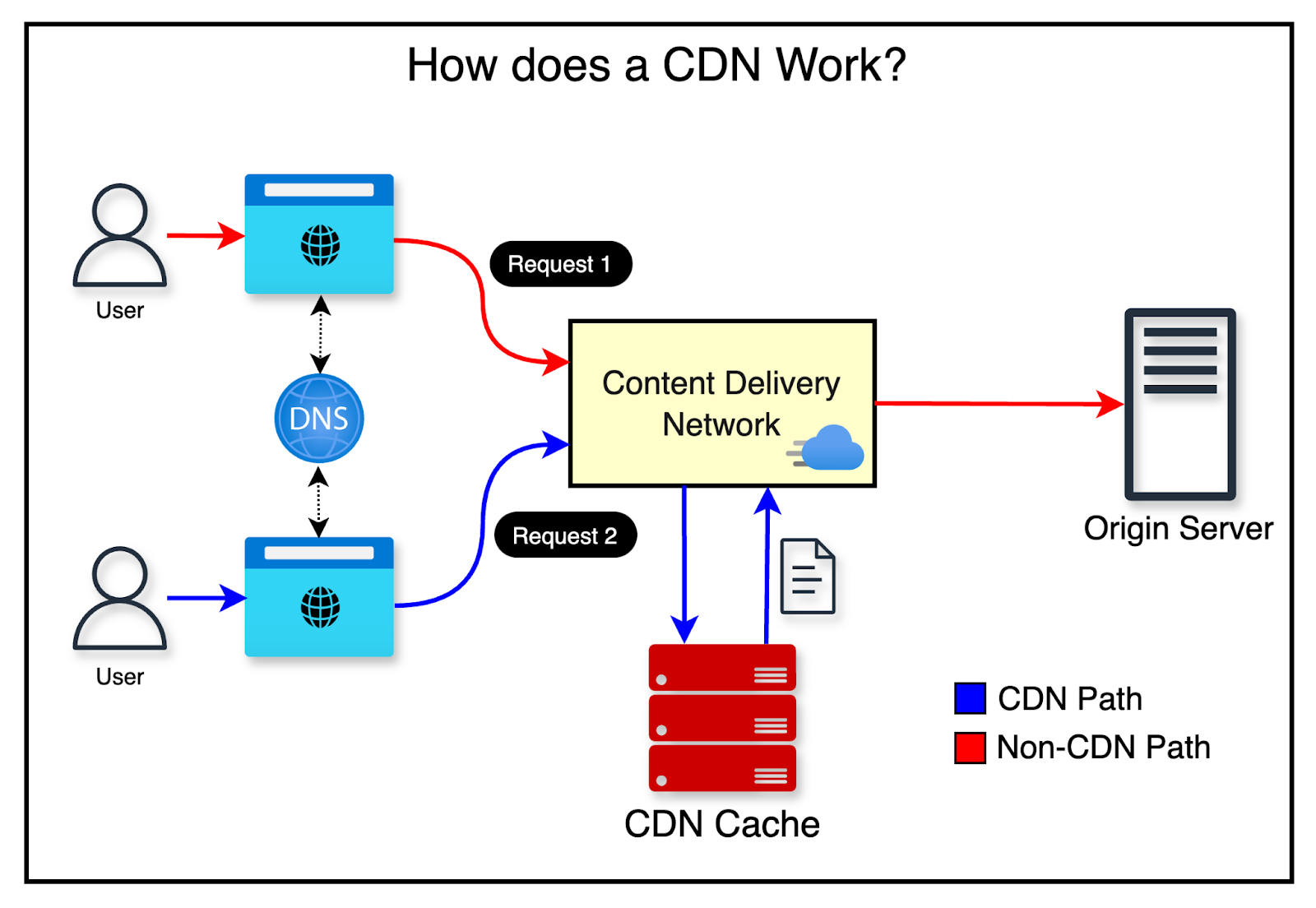
1️⃣ User requests a website
2️⃣ Request goes to nearest CDN edge server
3️⃣ If content available → served immediately
4️⃣ If not → fetched from origin server
5️⃣ Cached at edge server
6️⃣ Future users get faster access
📌 This process is transparent to users.
📦 What Type of Content Is Delivered via CDN?
🧾 Static Content
Images 🖼️
CSS / JS files
Videos
🔄 Dynamic Content
API responses
Personalized pages
📌 Modern CDNs support both.
🧠 CDN Caching
📌 Caching = Storing content temporarily
Reduces server load
Improves speed
Cache expiry:
Time-to-Live (TTL)
⚖️ CDN vs Traditional Hosting
Feature | Traditional Hosting | CDN |
|---|---|---|
Server location | Single | Distributed |
Delay | High (far users) | Low |
Scalability | Limited | High |
Availability | Low | High |
Cost efficiency | Lower | Better at scale |
📊 Benefits of CDN
⚡ Faster loading speed
🌍 Global reach
🔥 Reduced origin server load
📈 Better throughput
🛡️ DDoS protection
📉 Reduced packet loss
🛡️ CDN & Security
CDNs improve security by:
Absorbing DDoS attacks
Acting as shield for origin server
Providing HTTPS & TLS
📌 CDN = Performance + Security ✔️
📉 CDN & Network Performance Metrics
CDN improves:
Delay ⏱️
Jitter 🔄
Packet loss 📦❌
Throughput 📈
📌 Directly linked to Module 12 topics.
🌍 Popular CDN Providers (For Knowledge)
Cloudflare
Akamai
Amazon CloudFront
Google Cloud CDN
📌 Exam focus is on concept, not brands.
🧠 CDN vs Cloud (Quick Clarification)
CDN | Cloud |
|---|---|
Content delivery | Compute + storage |
Focus on speed | Focus on services |
Edge-based | Data center-based |
📌 CDN often works with cloud, not against it.
❌ Limitations of CDN
Cost for small websites
Cache consistency issues
Not ideal for all dynamic content
🧠 Memory Tricks
CDN = Close Data Network 🌍
Edge server = Nearby server
Cache = Fast access ⚡
⭐ One-Line Summary
🔹 A Content Delivery Network (CDN) improves web performance by delivering content from geographically distributed servers closer to users.