🤔 What Are Network Components?
A computer network does not work by magic 🪄.
It works because several important components come together and cooperate.
📌 Network Components are the basic building blocks required to create, operate, and manage a computer network.
👉 Without these components, no data transfer is possible.
🧩 Main Components of a Computer Network
A computer network mainly consists of the following components:
1️⃣ Devices (Nodes)
2️⃣ Transmission Media
3️⃣ Network Interface Cards (NIC)
4️⃣ Network Devices
5️⃣ Protocols
6️⃣ Network Software
We’ll understand each one slowly and clearly 👇
🖥️ Devices / Nodes
🔹 What is a Node?
A node is any device connected to a network that can send or receive data.
🧑💻 Examples of Nodes:
Desktop computers
Laptops
Smartphones 📱
Servers 🗄️
Printers 🖨️
IoT devices (Smart TV, Smart Watch)
📌 Important Point:
Each node has a unique identity in the network.
🔌 Transmission Media
🌐 What is Transmission Media?
Transmission media is the path or channel through which data travels from one device to another.
📌 It carries data in the form of:
Electrical signals ⚡
Light signals 💡
Radio waves 📡
🧵 Types of Transmission Media
📎 Wired (Guided Media)
Twisted Pair Cable
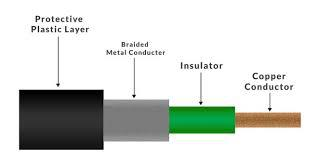
Coaxial Cable
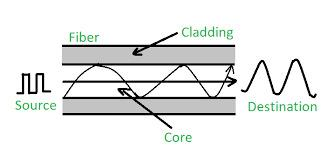
Fiber Optic Cable
📶 Wireless (Unguided Media)
Wi-Fi
Bluetooth
Radio waves
Microwave
Satellite
📌 We’ll study these in detail in Module 2.
💳 Network Interface Card (NIC)
🧠 What is NIC?
A Network Interface Card is a hardware component that allows a computer to connect to a network.
📌 Without NIC, a computer cannot communicate over a network.
🔍 Key Functions of NIC:
Converts data into signals
Provides MAC Address (unique physical address)
Controls data flow
📌 NIC can be:
Wired (Ethernet card)
Wireless (Wi-Fi card)
🌐 Network Devices
These devices help in connecting, managing, and controlling the network.
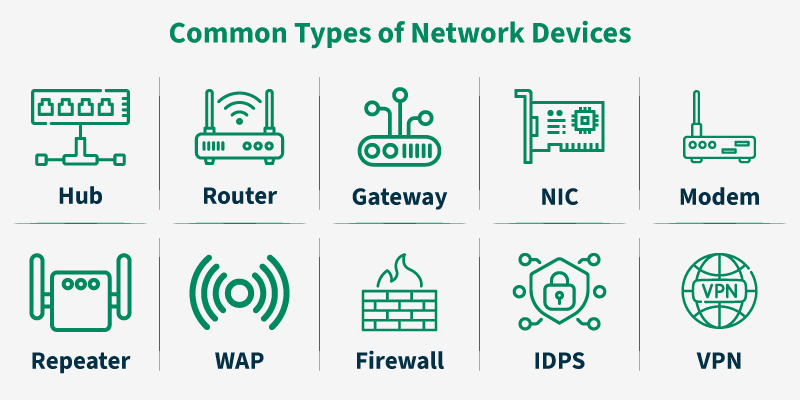
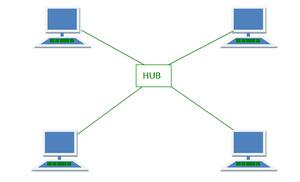
🔁 a) Hub
Basic connecting device
Sends data to all devices
No intelligence ❌
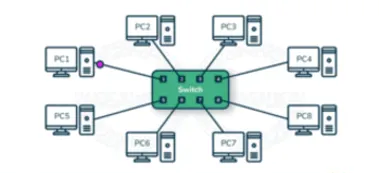
🔀 b) Switch
Smarter than hub
Sends data only to intended device
Improves performance ⚡
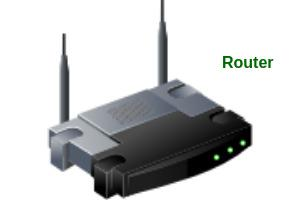
🌍 c) Router
Connects different networks
Routes data based on IP address
Used to connect LAN to Internet
📌 Home Wi-Fi router is the best example.
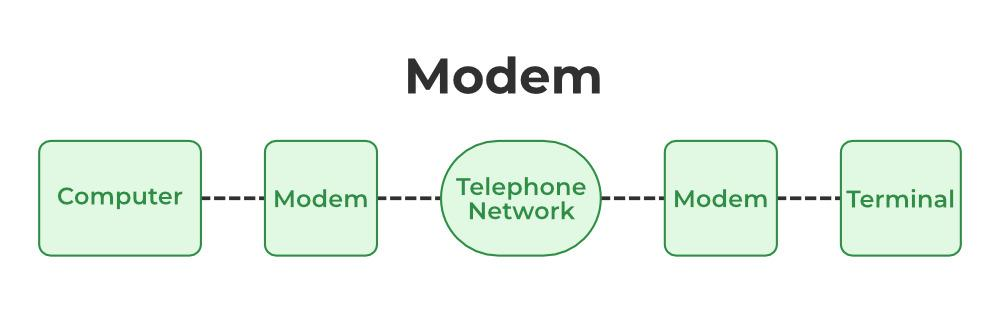
📶 d) Modem
Converts digital data to analog and vice versa
Used for Internet connectivity
🧱 e) Firewall (Basic Idea)
Protects network from unauthorized access
Works as a security guard 🛡️
📜 Protocols
📘 What is a Protocol?
A protocol is a set of rules that define how data is sent, received, and understood.
📌 Just like humans need a common language, computers need protocols.
🧠 Examples:
TCP/IP
HTTP
FTP
SMTP
📌 Protocols ensure:
Correct data delivery
Error handling
Security
💻 Network Software
🧩 What is Network Software?
Software that helps control, manage, and operate a computer network.
🧠 Examples:
Network Operating Systems (Windows Server, Linux)
Network monitoring tools
Firewall software
Antivirus software
📌 Helps in:
User management
Security
Performance monitoring
🧠 How All Components Work Together (Simple Flow)
1️⃣ User sends data from a computer
2️⃣ NIC converts data into signals
3️⃣ Data travels through transmission media
4️⃣ Network devices guide the data
5️⃣ Protocols ensure correct delivery
6️⃣ Receiver computer gets the data
👉 This process happens in seconds ⏱️
⭐ Important Points
✔️ Nodes are the devices connected to the network
✔️ Transmission media carries data
✔️ NIC enables network connectivity
✔️ Network devices manage data flow
✔️ Protocols define communication rules
✍️ One-Line Definition
📌 Components of a computer network are the devices, media, hardware, software, and protocols that work together to enable data communication.
🔑 Quick Summary
🧱 A computer network needs:
Devices to send/receive data
Media to carry data
NIC to connect
Devices to manage traffic
Protocols to follow rules
Software to control operations