🔐 Starting Authentication & Authorization
In this section, we begin implementing:
Authentication → Who are you?
Authorization → What are you allowed to do?
As our application grows, we must now think about structure and scalability, not just writing more endpoints.
🧠 The Architectural Problem
When starting authentication, your first instinct might be:
“Let’s just add more endpoints inside
main.py.”
For example:
/register/login/verify-token/users/me
But mixing:
Todo logic
Authentication logic
Authorization logic
inside a single file quickly becomes:
❌ Hard to maintain
❌ Difficult to scale
❌ Messy and tightly coupled
As backend engineers, we separate concerns.
🏗️ Step 1 — Create a Separate File for Auth
Inside your Todo project directory:
Create a new file: Inside TodoApp folder
auth.pyThis file will eventually contain:
User registration
Login
JWT logic
Password hashing
Role validation
🧩 Step 2 — Basic FastAPI Setup in auth.py
Inside auth.py, we may be tempted to write:
from fastapi import FastAPI

app = FastAPI()
Then create a demo endpoint:
from fastapi import FastAPI

app = FastAPI()

@app.get("/auth/")
async def get_user():
    return {"user": "authenticated"}
🚨 What Just Happened Internally?
When you write:
app = FastAPI()You are creating:
🧠 A completely new FastAPI application instance
This means:
main.pyhas its ownappauth.pynow has a differentapp
They are two completely separate ASGI applications.
🖥️ Step 3 — Running the Server
In the terminal, we still run:
uvicorn main:app --reloadFastAPI only loads:
main.py → appIt does NOT load:
auth.py → appBecause we never told FastAPI to include it.
🌐 What You Will Notice in the Browser
When you open:
/docsYou will see:
All Todo endpoints from
main.py
But you will NOT see:
GET /auth/Why?
Because auth.py is running its own separate FastAPI application that is never started.
❓ Why Not Just Run auth.py Separately?
You could run:
uvicorn auth:app --reload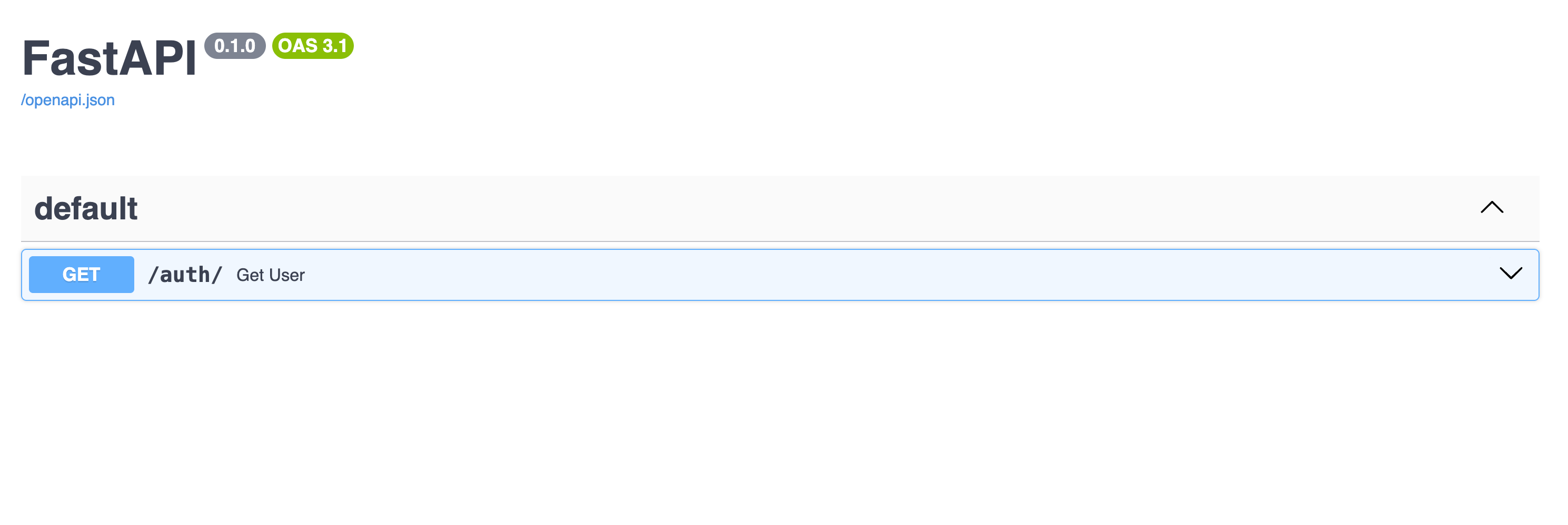
But then:
You lose access to your Todo endpoints
You now have two separate applications
They cannot share dependencies or database sessions cleanly
This is NOT how scalable backend systems are built.
🧠 Backend Concept — One Application, Multiple Routers
A production backend typically has:
One FastAPI application instance
Multiple modules
Organized routing
Instead of:
Multiple FastAPI apps ❌We want:
One FastAPI app
Multiple routers ✅
This allows:
Clean separation of concerns
Shared database sessions
Shared authentication logic
Scalable architecture
🗂️ auth.py
from fastapi import FastAPI

app = FastAPI()

@app.get("/auth/")
async def get_user():
    return {"user": "authenticated"}