🧑🎓 What is Participation Constraints?
Participation constraints define whether the existence of an entity depends on being related to another entity through a specific relationship.
It specifies how much an entity participates in a relationship.
📚 Types of Participation Constraints:
There are two types:
1️⃣ Total Participation (Mandatory Participation)
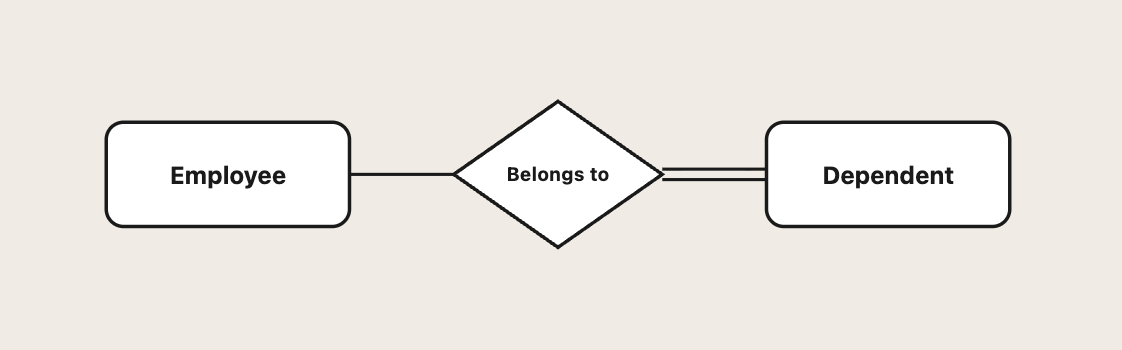
Every instance of the entity must participate in the relationship at least once. Represented in ER diagrams using a double line connecting the entity to the relationship.
📘 Example:
Every dependent must be related to an employee.
A weak entity always has total participation in its identifying relationship.
📐 ER Diagram:
2️⃣ Partial Participation (Optional Participation)
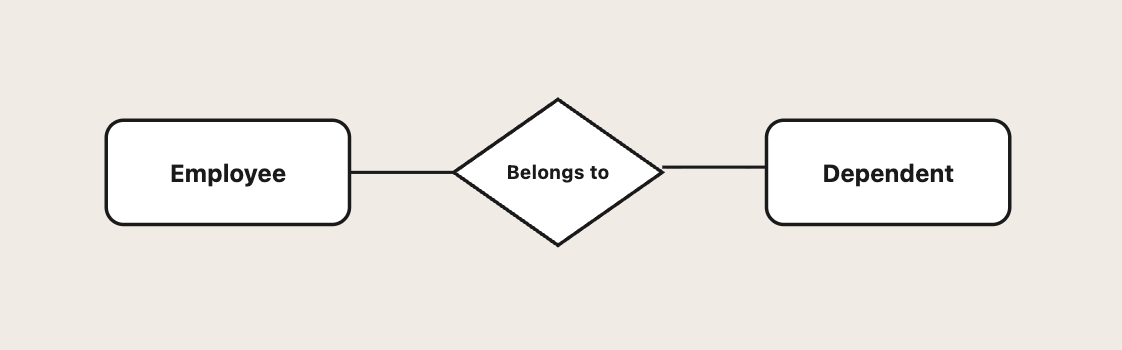
Some instances of the entity may not participate in the relationship. Represented in ER diagrams using a single line.
📘 Example:
Some students may not enroll in any course (e.g., newly admitted).
Not all employees may have dependents.
📐 ER Diagram:
🧠 Summary Table:
Constraint Type | 🔍 Meaning | 🔗 Line in ER Diagram |
|---|---|---|
Total Participation | All instances must participate | Double line ══ |
Partial Participation | Some instances may not participate | Single line ── |
✅ Key Points to Remember:
Weak entities always have total participation in their identifying relationships.
Participation constraints ensure referential integrity in the database.